
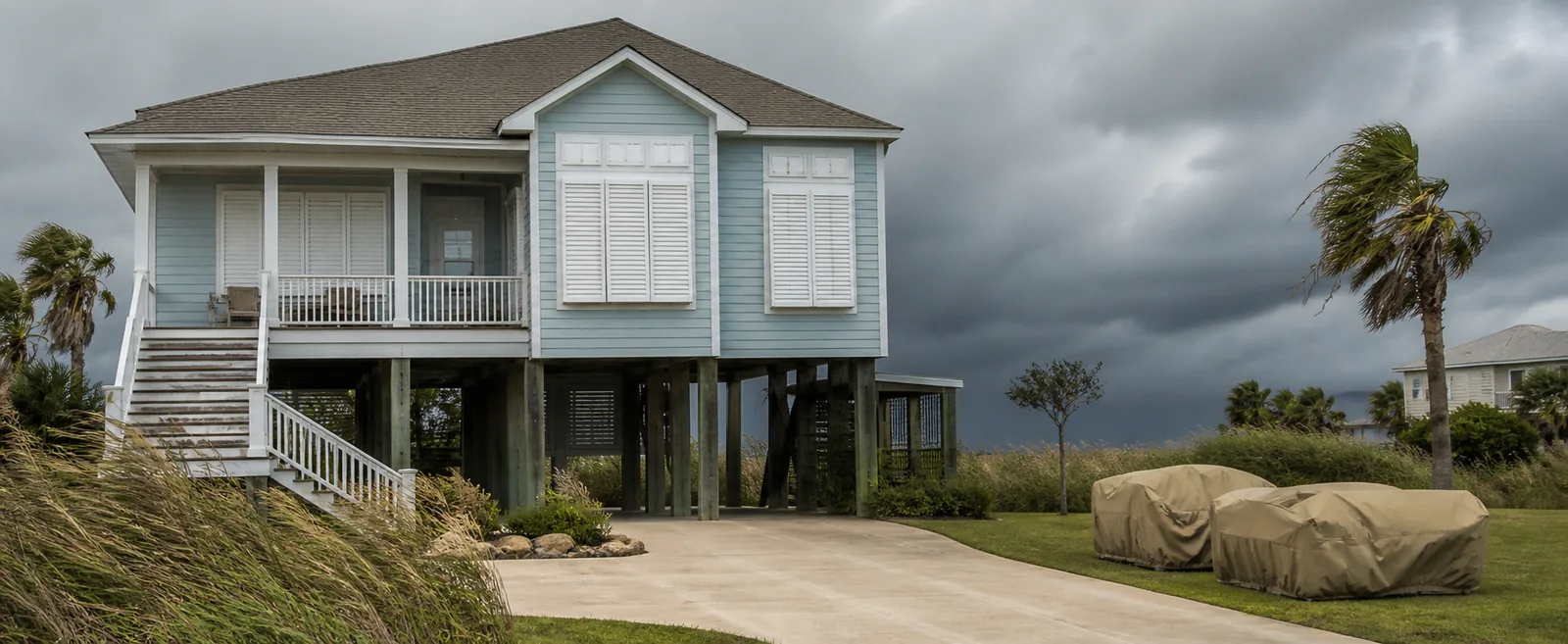
Texas Windstorm Insurance and TWIA: Who Needs It
Short answer: if your property sits in one of the 14 Texas coastal counties or in Harris County east of Highway 146, wind and hail may be stripped out of your homeowners policy and written separately. TWIA is the state's last-resort market for that coverage, and it has eligibility rules, a building code certificate requirement, and its own exclusions.
Coastal Texas insurance is the most structurally complicated property insurance in the state. A single house near Galveston Bay can require three separate policies from three different sources to be genuinely covered, and homeowners routinely discover the gap after a storm rather than before.
This guide covers who needs separate windstorm coverage, how Texas Windstorm Insurance Association eligibility actually works, what a WPI-8 is and why it can block a closing, and what TWIA leaves out. For how the deductibles work once you have coverage, see the wind and hail deductible guide.
Why wind gets separated from the rest of the policy
Inland, a Texas homeowners policy typically covers wind and hail alongside fire, theft, and liability. On the coast, many private carriers will not accept the hurricane exposure, so they write everything except wind and hail and leave that peril to be placed separately.
That produces a coverage structure most homeowners do not expect:
- A homeowners policy covering fire, theft, liability, water damage from plumbing, and most other perils, with wind and hail excluded.
- A windstorm policy, from TWIA or a private carrier, covering wind and hail.
- A flood policy, from the NFIP or a private flood carrier, covering rising water and storm surge.
Three policies, three deductibles, three claim processes, and three sets of exclusions. A hurricane can trigger all three at once, and figuring out which policy pays for which damage is a real part of coastal claims.
The practical warning: seeing a homeowners declarations page and assuming you are covered for a hurricane is the most common and most expensive coastal mistake in Texas.
The TWIA designated area
TWIA's designated area currently includes all 14 first-tier coastal counties:
Aransas, Brazoria, Calhoun, Cameron, Chambers, Galveston, Jefferson, Kenedy, Kleberg, Matagorda, Nueces, Refugio, San Patricio, and Willacy.
It also includes parts of Harris County east of Highway 146. That last detail matters enormously in the Houston market, because it means the designated area reaches into the metro. A property in Seabrook, La Porte, or Baytown may sit inside the designated area while a property a few miles west does not.
Two practical points. Being inside the designated area does not automatically mean you need TWIA, because private carriers do write wind on the coast and appetite shifts year to year. And being outside it does not mean wind is automatically included in your homeowners policy, because individual carriers set their own coastal restrictions independent of TWIA's boundaries.
Verify by address, not by city or general impression.
TWIA eligibility
TWIA is the insurer of last resort, which means it is not a first option and there are conditions.
To be eligible, a property generally must satisfy all of the following:
Location. The property must be in the designated catastrophe area.
Declination. You must have been denied windstorm and hail coverage by at least one authorized private insurer actively writing or renewing that coverage in the designated area. This is what "last resort" means in practice, and it is why an independent agent should shop the private market first.
Building code compliance. The property must comply with applicable windstorm building code requirements, evidenced by a certificate of compliance.
Insurable condition. The property must be in insurable condition, meaning maintained and free of significant unrepaired damage.
TWIA writes residential dwellings, personal property, manufactured homes, commercial buildings, business personal property, townhouses and condominiums, and miscellaneous items including signs, fences, swimming pools, and flagpoles.
The WPI-8 certificate
This is the piece that delays closings and surprises buyers, and it is worth understanding before you are under contract.
A WPI-8 is a certificate of compliance issued confirming that a structure was built or altered in accordance with applicable windstorm building code standards. Variants include the WPI-8-C issued by TWIA and the WPI-8-E based on an engineer's evaluation.
TWIA generally requires a certificate on all structures constructed, altered, remodeled, enlarged, repaired, or added to on or after January 1, 1988, with limited exceptions.
Why this causes problems:
- Work done without a certificate. A previous owner replaced a roof, added a room, or enclosed a porch without obtaining windstorm inspection and certification. The improvement now blocks eligibility until it is certified or remediated.
- Certification is not retroactive by default. Getting a certificate after the fact can require an engineer's evaluation, and if the work does not meet the standard, it may require physical remediation.
- Timelines. Inspection, evaluation, and certification take time. A buyer discovering a missing WPI-8 during the option period has options. A buyer discovering it three days before funding does not.
TDI administers the windstorm inspection program, including inspector qualification and product evaluation reports. If you are buying on the coast, ask for the WPI-8 documentation on any post-1988 work early in the option period, not at the end of it.
What TWIA does not cover
This is where coastal homeowners get hurt.
Flood, including storm surge. TWIA covers wind and hail. Water that rises and enters the structure is a flood peril, and it requires separate flood insurance. In a hurricane, damage is frequently caused by both wind and water, and the two policies each pay for their own portion. Disputes over wind versus water causation are the single most contested issue in coastal claims. Review the Texas flood insurance guide.
Everything a homeowners policy covers. Fire, theft, liability, plumbing leaks, and personal liability all sit on your homeowners policy. A TWIA policy alone is not home insurance.
Wear, maintenance, and pre-existing damage. As with any property policy, gradual deterioration and deferred maintenance are not covered.
Certain outbuildings and property depending on the policy form and endorsements selected.
Coverage above TWIA's maximum liability limits. TWIA sets maximum limits by property type, and they are adjusted periodically. A high-value coastal home can exceed them, requiring excess wind coverage from a private or surplus lines carrier to fill the gap above TWIA's ceiling. Confirm the current limits when you quote, because a home that fit under the cap five years ago may not today after construction cost inflation.
Deductibles on a windstorm policy
Windstorm deductibles are almost always percentage-based, calculated from the insured value rather than from the size of the claim.
On a dwelling insured for $400,000 with a 2 percent windstorm deductible, the first $8,000 of a covered wind or hail claim is yours. Coastal policies frequently offer 1, 2, and 5 percent options, and the premium difference between them is substantial.
Three things to sit with:
- The deductible applies per event. Two named storms in one season means two deductibles.
- A percentage deductible grows as your dwelling limit grows. Inflation adjustments raise the dollar amount every year without any action on your part.
- Your windstorm deductible is separate from your homeowners deductible and your flood deductible. A hurricane that damages your roof, floods your first floor, and starts an electrical fire can trigger all three.
Choose a percentage you could actually fund on short notice, not the one that produces the lowest premium.
Mitigation and building features that help
Coastal underwriting rewards construction that survives storms, and some features can affect eligibility as well as price.
Features that commonly matter:
- Roof covering type, age, and attachment method.
- Roof-to-wall connections, including hurricane straps and clips.
- Opening protection: impact-rated windows and doors, or code-approved shutters.
- Garage door wind rating, which is a common failure point.
- Elevation, particularly for flood.
- Overall compliance with current windstorm building code.
If you are replacing a roof or windows on a coastal property, doing it to a higher wind standard and obtaining the windstorm certification at the time of the work is far cheaper than certifying it years later. Keep every certificate, permit, and product evaluation report in a file that transfers with the house.
If you are buying on the coast
The sequence that prevents problems:
- Confirm the exact address is in the designated area, rather than assuming from the city.
- Ask for the WPI-8 documentation on any construction, roof replacement, addition, or remodel done on or after January 1, 1988, during the option period.
- Get all three quotes early: homeowners, windstorm, and flood. Not one, not two.
- Have an independent agent check the private wind market first. TWIA is last resort, and private options exist in parts of the coastal area.
- Confirm your lender's requirements. Lenders on coastal property frequently require windstorm and flood coverage specifically, and they will verify before funding.
- Compare deductibles across all three policies so you know your total out-of-pocket exposure in one storm.
- Check TWIA's maximum limits against the replacement cost of the home.
Roof age, prior claims, and missing certificates are the three issues most likely to derail a coastal closing, and all three are discoverable during the option period if anyone looks.
Filing a windstorm claim
Coastal claims are more complicated than inland ones because multiple policies are involved and causation is contested.
Document before you clean up. Photograph and video everything before removing debris or making repairs. In a wind versus water dispute, the water line inside the structure and the pattern of damage are the evidence.
Make reasonable emergency repairs to prevent further damage, and keep receipts. Most policies impose a duty to mitigate, and tarping a roof is expected. Do not begin permanent repairs before the adjuster inspects.
File with every policy that could respond. Homeowners, windstorm, and flood are separate claims with separate adjusters, separate deductibles, and separate deadlines. Filing with one does not notify the others.
Understand the causation fight. Wind-driven rain entering through a wind-created opening is generally a wind claim. Water that rose from outside and entered at ground level is generally a flood claim. When a hurricane produces both, adjusters allocate, and homeowners are frequently caught between two carriers each attributing damage to the other's peril. Thorough documentation is your leverage.
Watch the deadlines. TWIA and NFIP each have their own claim notice and proof of loss requirements, and NFIP proof of loss deadlines in particular are strict.
Expect delays after a major storm. A landfalling hurricane generates tens of thousands of claims simultaneously. Adjuster availability, contractor availability, and material lead times all stretch. This is one reason additional living expense limits and time periods deserve attention before a storm rather than after.
The three-policy reality, priced
A coastal Texas homeowner should budget for three premiums, not one:
- Homeowners, covering fire, theft, liability, and plumbing water damage, with wind and hail excluded.
- Windstorm, from TWIA or a private carrier, covering wind and hail with its own percentage deductible.
- Flood, from the NFIP or a private carrier, covering rising water with its own separate deductible.
Buyers comparing a coastal property to an inland one frequently model only the homeowners premium and are shocked at closing. Getting all three quoted during the option period is the single most useful thing a coastal buyer can do, because the combined number changes what the property actually costs to own.
Where Argo fits
Coastal placement is the clearest argument for an independent agency. The answer requires shopping the private wind market, knowing which carriers currently write in which parts of the coast, coordinating a homeowners policy that excludes wind with a separate windstorm policy, adding flood, and confirming the WPI-8 situation before anyone is under a deadline.
Send the property address, year built, roof age and material, details of any post-1988 work, and your closing or renewal date. Argo Insurance will tell you whether the private market will write the wind, whether TWIA is the right answer, and what the total picture across all three policies actually costs. Start with a wind and hail review.
This article summarizes TWIA and TDI published guidance as of the review date. Eligibility rules, designated area boundaries, maximum limits, and certificate requirements change, and TWIA's current rules control. Verify directly before relying on any figure here.
Related resources
How Argo can help
Not sure how this guide applies to you? A licensed Argo agent can review your situation in English or Spanish.
- Review your current policy or insurance requirement
- Explain coverage choices, limits, and deductibles
- Help you start a quote or plan the next step