
Texas Motorcycle Insurance Requirements Explained
Short answer: Texas requires the same minimum liability on a motorcycle as on a car: at most $30,000 for medical bills per person, $60,000 per accident, and $25,000 for property damage. That minimum is a poor fit for motorcycle risk, because rider injuries are more severe and the coverages that actually protect you, uninsured motorist and medical payments, are optional.
Riders also encounter gaps that car owners never think about. Your helmet and riding gear are generally not covered by a standard policy. Custom parts above a small limit are not covered. And the coverage that matters most in a serious crash is the one most often declined.
This guide covers what Texas requires, what it leaves out, and how to structure a policy that fits how motorcycles actually get damaged and riders actually get hurt.
What Texas requires
Motorcycles are motor vehicles under Texas financial responsibility law, so the liability requirement is identical to a car.
TDI describes the minimum liability policy as paying at most:
- $30,000 for medical bills per person
- $60,000 per accident when multiple people are hurt
- $25,000 for property damage
Written as 30/60/25.
You must be able to show proof of financial responsibility when asked by law enforcement, at registration, and after an accident.
Licensing is separate from insurance but related. Texas requires the proper motorcycle authorization on your driver license. Riding without it can affect a claim, because most policies condition coverage on operation by a properly licensed driver.
Why the minimum is a poor fit for riding
Two structural facts.
Motorcycle injuries are more severe. A rider has no structure around them. The same collision that produces a fender bender between two cars produces orthopedic injury, road rash, and head trauma for a rider. Medical costs escalate quickly, and $30,000 in bodily injury liability does not go far.
Liability protects other people, not you. Your liability coverage pays for damage and injury you cause. It does nothing for your injuries, your bike, or your gear. Most riders' actual exposure is the reverse of what the state requires them to insure.
The coverages that protect the rider are all optional in Texas, which is why so many riders discover after a crash that they carried exactly what the law required and almost nothing they needed.
The coverages that actually matter to a rider
Uninsured and underinsured motorist
Arguably the most important optional coverage on a motorcycle policy.
It pays for your injuries, lost wages, and pain and suffering when the at-fault driver has no insurance or not enough. Given that Texas has a meaningful uninsured population and a low minimum, and given that a driver carrying 30/60/25 can easily leave a badly injured rider far short, this is the coverage that closes the largest gap.
It must be offered in Texas and rejected in writing. Check your declarations page, because many riders declined it without registering that they had.
Medical payments
Pays medical costs regardless of fault, up to the limit. For riders this is meaningful even with health insurance, because it covers deductibles and coinsurance and pays quickly.
Note that personal injury protection is generally available for autos but treated differently for motorcycles by many carriers. Ask specifically what your carrier offers.
Comprehensive
Covers theft, vandalism, fire, hail, and flood. Motorcycle theft rates are higher than car theft rates, and a bike stored outside or in an unsecured garage is exposed. Comprehensive is also what covers hail damage while the bike sits, which matters in Texas.
Collision
Covers your bike after a crash or a drop, subject to your deductible. Required by any lender.
Worth knowing: low-speed drops in parking lots are among the most common motorcycle physical damage claims, and they are collision losses.
The gaps riders discover after a loss
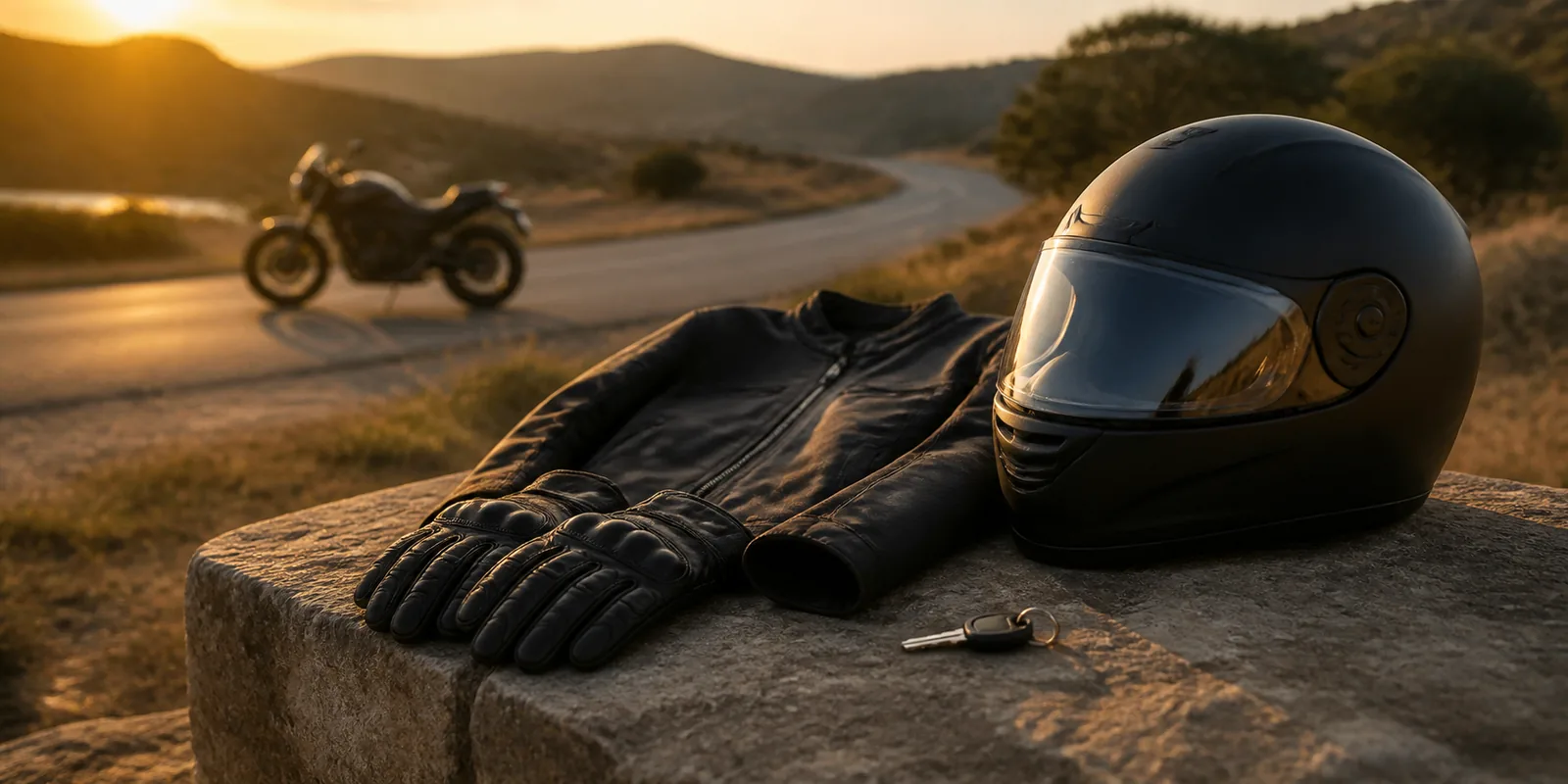
Safety apparel and helmets. This is the one that surprises people most. Helmets, jackets, gloves, boots, and armored gear are generally not covered by a standard motorcycle policy. A full set of quality gear represents real money, and it is frequently destroyed in the same crash that damaged the bike.
Many carriers offer a safety apparel endorsement covering gear up to a stated limit. Ask for it by name, because it is rarely included by default.
Custom parts and accessories. Exhaust, seats, bags, windscreens, lighting, engine guards, audio, and paint. Standard policies typically include a small allowance, often $1,000 to $3,000, and riders routinely exceed it without realizing. Additional custom parts coverage is available and needs to be scheduled with documentation of value.
Trailers. A trailer used to haul the bike needs its own coverage.
Passenger liability. Some policies limit or exclude passenger coverage, or require a specific endorsement. If you carry passengers, confirm it.
Track days and competitive events. Almost universally excluded. Riding on a closed course at an organized event generally requires separate coverage.
Roadside assistance. Motorcycle towing requires appropriate equipment and not every roadside program covers it properly. Confirm the program handles motorcycles specifically.
Rental reimbursement. Less commonly offered on motorcycle policies, and worth asking about if the bike is your primary transportation.
Seasonal coverage and the lapse trap
Riders who store bikes over winter sometimes cancel coverage entirely to save money. This is usually a mistake for three reasons.
Comprehensive is what covers theft, fire, and hail while the bike sits, which is exactly when those risks are highest.
A lapse becomes a rating factor that follows you for years, on both motorcycle and auto policies.
Lenders require continuous coverage on financed bikes.
The better approach is to ask about a layup or storage option that reduces coverage to comprehensive only during months you are not riding. This keeps continuous coverage history, protects the bike where it sits, and lowers the premium without creating a gap.
What drives motorcycle rates
- The bike itself. Engine displacement, type, and value. Sport bikes rate very differently from cruisers and touring bikes of similar value.
- Rider age and experience, including years licensed to ride specifically.
- Riding record, both motorcycle and auto violations.
- Location and where the bike is stored. Garaged rates better than street parked.
- Annual mileage, which is usually much lower than a car's.
- Coverage and limits selected.
- Safety course completion. Many carriers offer a discount for an approved rider safety course, and the course itself materially reduces crash risk for newer riders.
- Claim history.
- Anti-theft devices.
Motorcycle premiums are often lower than car premiums for the same limits, which makes carrying adequate liability and uninsured motorist coverage more affordable than riders assume. Quote it rather than defaulting to minimums.
A structure that fits the risk
For most Texas riders, a policy built around actual exposure looks like:
- Liability well above 30/60/25. Enough to cover a serious injury to another party.
- Uninsured and underinsured motorist matching your liability limits. This is the one that protects you.
- Medical payments at a meaningful limit.
- Comprehensive and collision with deductibles you could fund, unless the bike's value genuinely no longer justifies it.
- Safety apparel endorsement sized to your actual gear.
- Custom parts coverage sized to your actual modifications, with documentation.
- A personal umbrella above the auto and motorcycle liability, if the household qualifies.
- Motorcycle-appropriate roadside assistance.
What happens in a motorcycle claim
Two aspects differ enough from auto claims to be worth understanding in advance.
Liability disputes are more common. Motorcycles are less visible, and the reflexive assumption in a car-versus-motorcycle collision often favors the driver. Documentation matters more for a rider than for a driver.
Practical steps at the scene: get police involved, photograph everything including sight lines and road conditions, collect witness contact information immediately since witnesses leave quickly, and avoid discussing fault. If you were wearing a helmet camera, preserve the footage.
Injury claims take longer. Rider injuries are more severe, treatment runs longer, and the full extent is often not known for months. Do not settle an injury claim before treatment concludes, because a settlement includes a release and the claim closes permanently.
Total losses are common. A motorcycle sustains disabling damage at lower impact speeds than a car. Expect that a meaningful crash may total the bike, and understand that you receive actual cash value minus your deductible, not what you paid or what a replacement costs today. If you financed, gap coverage is the only thing that closes the difference.
Insuring other recreational vehicles
Riders frequently own more than one type of machine, and each needs its own treatment.
Dirt bikes and off-road motorcycles. Generally not covered by a street motorcycle policy. Separate off-road coverage is available, and it matters because these are frequently stolen from trailers and garages.
ATVs and UTVs. Their own policy. Liability while operating on someone else's property is the exposure people underestimate.
Scooters and mopeds. Requirements depend on engine displacement and how the vehicle is classified in Texas. Confirm rather than assuming a small scooter is exempt.
Trailers used to haul the bike. Need their own coverage. Trailer theft is common and the trailer is not automatically covered by the policy on the towing vehicle.
Classic and vintage motorcycles. Often better written on an agreed value basis rather than actual cash value, so the settlement figure is set at policy inception rather than argued after a loss.
Bundling these with your auto and home coverage frequently produces a multi-line discount that offsets a meaningful share of the additional premium.
Discounts riders miss
Motorcycle policies carry their own discount set, and it is rarely applied automatically.
- Rider safety course. Most carriers credit an approved course, and for newer riders it also materially reduces crash risk. Worth doing regardless of the discount.
- Multi-bike. More than one motorcycle on the policy.
- Multi-policy. Bundling with auto, home, or renters. Usually the largest available.
- Mature rider. Some carriers credit riders above a certain age with experience.
- Association membership, through riding organizations.
- Anti-theft devices, alarms, and trackers.
- Pay in full and paperless.
- Claim-free and safe rider credits.
- Storage or layup periods, where offered.
Ask for each by name rather than asking whether discounts exist. And because motorcycle premiums are lower than auto premiums in absolute terms, riders often skip the discount conversation entirely, which leaves real money on the table across a multi-vehicle household.
Storage, theft, and where the bike sits
Where a motorcycle spends its time affects both the premium and the likelihood of a claim.
Garaged and locked rates best and reduces theft and hail exposure meaningfully.
Carport or covered but unsecured protects against hail but not theft.
Street parked or in an open lot is the highest exposure on both counts.
Motorcycles are stolen at higher rates than cars, and they are stolen differently. A bike can be lifted into a truck in under a minute without ever being started, which means ignition-based security is not enough on its own.
Measures that help, and that some carriers credit:
- A disc lock or chain through the frame to a fixed anchor, not just through a wheel
- A ground anchor in the garage
- A cover, which reduces opportunistic interest
- A GPS tracker
- An alarm
- Parking among other vehicles rather than isolated
Documentation matters too. Photograph the bike, the VIN plate, and every modification annually, and keep receipts for custom parts. A theft claim on a heavily modified bike is far easier to settle fairly when the modifications are documented before the loss rather than described afterward.
Before you ride this season
- Pull your declarations page and find your liability limits
- Confirm whether uninsured and underinsured motorist is present or was rejected
- Add up what your gear is actually worth and compare it to your apparel endorsement, if you have one
- Add up your custom parts and compare them to the included allowance
- Confirm your motorcycle license authorization is current
- Ask whether a rider safety course discount is available
- If you store seasonally, ask about a layup option instead of cancelling
- Photograph the bike, the modifications, and the gear for documentation
Riders tend to invest carefully in the bike and gear and then insure both by default. Use the motorcycle insurance path with your declarations page and a list of modifications and gear so the relevant limits, exclusions, and available options can be reviewed.
Related resources
How Argo can help
Not sure how this guide applies to you? A licensed Argo agent can review your situation in English or Spanish.
- Review your current policy or insurance requirement
- Explain coverage choices, limits, and deductibles
- Help you start a quote or plan the next step