
What Does Comprehensive Insurance Actually Cover?
Short answer: comprehensive covers damage to your vehicle from things that are not collisions. Hail, theft, vandalism, fire, flood, falling objects, and animal strikes. In Texas it is the coverage most likely to actually pay out, because hail is the state's most common vehicle claim.
The name is misleading. "Comprehensive" sounds like it covers everything, and it does not cover the most obvious thing: hitting another car. That is collision. Comprehensive is sometimes called "other than collision" in policy language, which is a far more accurate description.
This guide covers what it includes, what it does not, and how to decide whether to carry it.
What comprehensive covers
Hail. The one that matters most in Texas. Hail damage to a parked vehicle is a comprehensive claim, and in the Dallas-Fort Worth, Austin, San Antonio, and Houston corridors it is a routine event rather than a rare one.
Theft. Theft of the entire vehicle, and typically theft of permanently attached parts. Catalytic converter theft has been a persistent claim driver across Texas metros.
Vandalism. Keyed paint, slashed tires, broken windows, graffiti.
Fire. Whether from a vehicle malfunction, an external fire, or arson.
Flood. Rising water damage to a vehicle is a comprehensive loss. This is an important distinction from home insurance, where flood requires a completely separate policy. If your car floods in a Houston storm, your auto policy's comprehensive coverage is what responds.
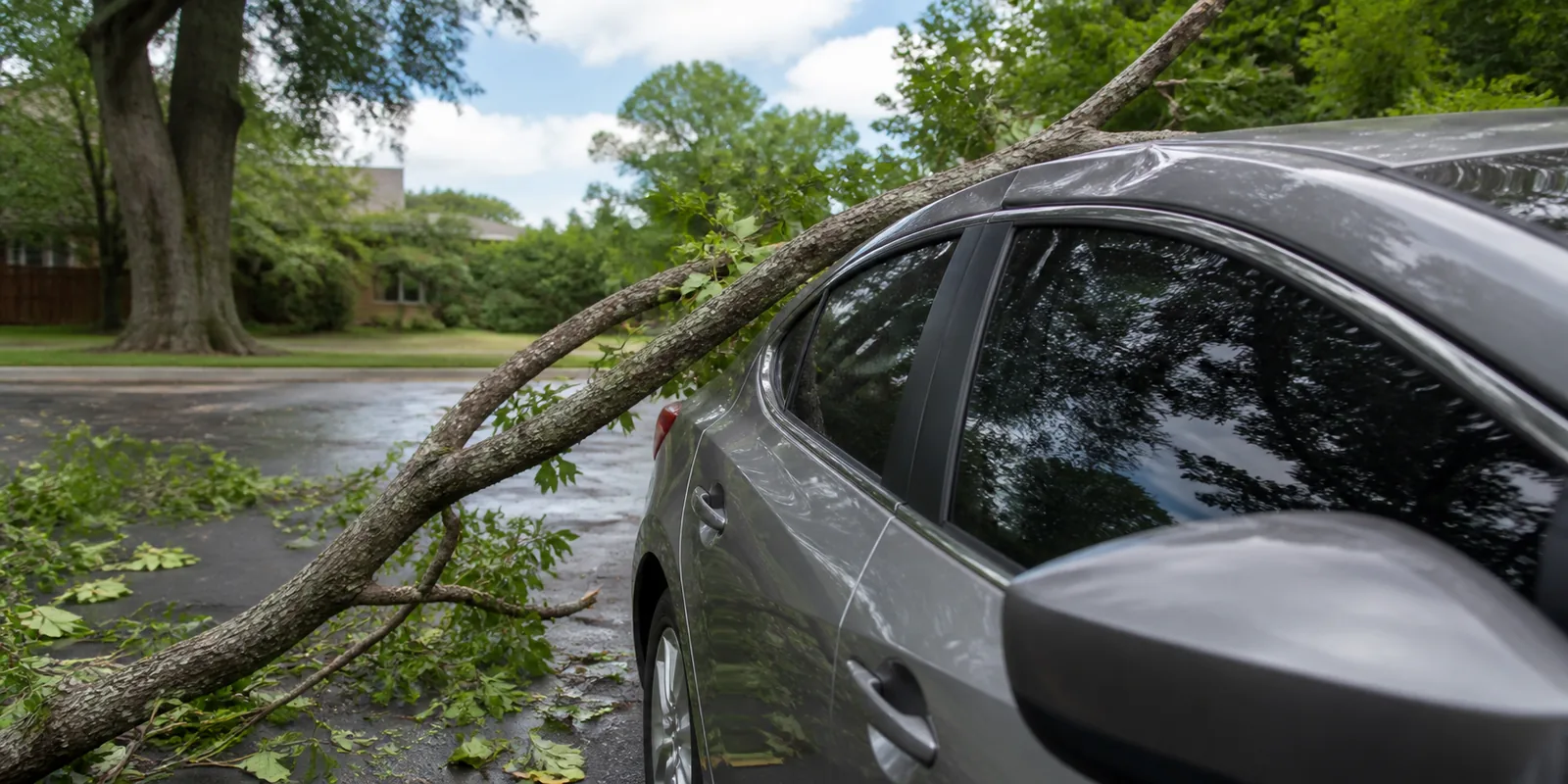
Falling objects. Tree limbs, debris, and objects falling from structures.
Animal strikes. Hitting a deer is generally treated as comprehensive rather than collision, which usually means a lower deductible. Damage from animals nesting in or chewing through a vehicle is also typically comprehensive.
Glass breakage. Windshield and window damage. Some Texas policies handle glass differently, occasionally with a reduced deductible or none at all.
Civil disturbance and riot.
Impact with a bird or animal, as distinct from swerving to avoid one, which can be treated as collision.
What comprehensive does not cover
Collisions with vehicles or objects. That is collision coverage.
Damage you cause to other people or their property. That is liability.
Your medical bills. That is personal injury protection or medical payments.
Mechanical breakdown. Engine failure, transmission problems, and normal wear are maintenance, not insured perils.
Normal wear, rust, and deterioration.
Items stolen from inside the car. Your laptop, tools, and personal belongings taken from the vehicle are generally covered by your homeowners or renters policy, not your auto policy. Comprehensive covers the vehicle and its permanently attached parts.
Custom equipment beyond a small limit. Aftermarket wheels, sound systems, lift kits, and permanent toolboxes usually need a custom equipment endorsement.
Business use exposures if the vehicle should be on a commercial policy.
The Texas hail reality
This is the section worth reading if you are deciding whether to carry comprehensive at all.
Texas leads the country in hail claim volume, and vehicle hail damage is different from home hail damage in one important way: your car is often parked outside with no protection at all. A single storm can dent every horizontal surface on a vehicle and crack the windshield.
Three practical points:
Your comprehensive deductible determines whether the coverage is useful. A $2,000 comprehensive deductible on a vehicle that sustains $2,400 of hail damage produces a $400 payment. In hail country, a high comprehensive deductible can effectively cancel the coverage you are paying for.
Hail claims are generally not-at-fault. Comprehensive claims are treated differently from at-fault accidents in rating. That does not mean they are free of consequence, because carriers do look at total claim frequency, but a single weather claim is not the same as a collision you caused.
Paintless dent repair is usually the fix. Most hail damage is repaired without repainting, which is faster and cheaper. You may choose your repair shop. Be cautious with operations that appear in your neighborhood immediately after a storm, and confirm the shop with your adjuster before authorizing work.
Comprehensive and total losses
When repair costs approach the vehicle's value, the insurer may total it rather than repair it.
On a hail claim this happens more often than people expect, particularly on older vehicles, because hail damages every panel at once and the repair estimate can exceed a modest actual cash value.
What that means practically:
- You receive the vehicle's actual cash value minus your deductible, not what you paid for it and not what it would cost to replace with a newer model.
- If you owe more on the loan than the vehicle is worth, the difference is yours unless you carry gap coverage.
- You may have the option to retain a totaled vehicle at a reduced settlement, which affects the title.
Do you need it?
You have no choice if the vehicle is financed or leased. Lenders require both comprehensive and collision.
If you own the vehicle outright, run the arithmetic rather than a rule of thumb:
- What is the vehicle's current market value?
- Subtract your comprehensive deductible. That is roughly the most a total loss pays.
- Compare that to what you pay annually for comprehensive.
- Consider how many years you plan to keep the vehicle.
If a total loss would pay $2,200 and comprehensive costs $260 a year, you are paying about a ninth of the maximum payout annually for a coverage you might use once.
Two things that push toward keeping it even on a low-value car:
- You live in a hail-prone area and park outside. The claim is likely rather than remote.
- Losing the vehicle would be a genuine hardship, because you could not replace it or could not get to work without it.
One thing that pushes toward dropping it: if the vehicle's value has fallen far enough that a claim would net you very little after the deductible.
Note that comprehensive is usually the cheaper of the two physical damage coverages. Drivers sometimes drop collision and keep comprehensive on an older vehicle, which preserves protection against theft and hail at a modest cost.
Choosing your comprehensive deductible
Separate from your collision deductible, and worth setting deliberately.
Lower it if you are in a hail-prone area, park outside, or could not comfortably fund a large out-of-pocket amount after a storm.
Raise it if you park in a garage, have solid cash reserves, and want to reduce premium on a vehicle you could replace.
Ask about glass specifically. If your policy handles windshield claims separately, that changes the calculation, because modern windshields with embedded sensors are expensive to replace and recalibrate.
Filing a comprehensive claim
Theft or vandalism: file a police report first. Most policies require it, and the report number is the first thing an adjuster asks for.
Hail: photograph the vehicle in good light from multiple angles, and note the date of the storm. Do not authorize repairs before the adjuster inspects or gives you authority to proceed.
Flood: do not attempt to start a vehicle that has been in water. It can convert a repairable loss into a total one and can complicate the claim.
Animal strike: photograph the scene if it is safe, and report it. If you swerved and hit something else instead of hitting the animal, the claim may be treated as collision, which is worth knowing before you describe the event.
In all cases, report promptly. Late reporting is the most common avoidable problem in claims handling.
Related coverages worth checking
Rental reimbursement. Comprehensive pays to repair your car, not to get you around while it is in the shop. After a widespread hailstorm, repair backlogs can run weeks.
Gap coverage, if you owe more than the vehicle is worth.
Custom equipment, for aftermarket parts above the base limit.
Homeowners or renters, for personal belongings stolen from the vehicle.
Personal injury protection, since comprehensive covers no medical costs at all.
Comprehensive versus collision on the same event
The line between the two is not always intuitive, and which one applies changes your deductible.
| Event | Usually treated as |
|---|---|
| Hitting a deer | Comprehensive |
| Swerving to avoid a deer and hitting a fence | Collision |
| Tree limb falls on parked car | Comprehensive |
| Driving into a fallen tree limb | Collision |
| Hail while parked | Comprehensive |
| Rock thrown by a passing truck cracks windshield | Comprehensive |
| Vehicle stolen and later recovered damaged | Comprehensive |
| Vandalism in a parking lot | Comprehensive |
| Backing into your own garage door | Collision |
| Flood water rises around a parked car | Comprehensive |
| Hydroplaning into a barrier | Collision |
| Fire caused by a wiring fault | Comprehensive |
The pattern: if the vehicle struck something as a result of being driven, it is generally collision. If something happened to the vehicle, it is generally comprehensive.
This matters practically because the two deductibles are usually different, and because describing an event accurately when you report it determines which applies. Do not guess at the categorization, just describe what happened.
Protecting a vehicle before the storm
Comprehensive pays after a loss. A few habits reduce how often you need it.
Park under cover when hail is forecast. Texas storm warnings typically give hours of notice. A garage, a carport, or a parking structure is the single most effective thing you can do.
Do not use a car cover as hail protection. Standard covers do not absorb hail impact. Purpose-built hail blankets exist and work, but ordinary covers do not.
Keep valuables out of sight. Most vehicle break-ins are opportunistic. A visible bag or laptop is the trigger.
Consider anti-theft measures on high-theft models. Certain vehicles have seen dramatic theft increases, and steering locks, kill switches, and catalytic converter shields are inexpensive relative to a deductible plus the disruption.
Photograph your vehicle annually. A dated set of photos showing the car in good condition makes a hail claim straightforward and prevents disputes about pre-existing damage.
Do not drive into standing water. Flood damage to a vehicle is covered, but a flooded vehicle is frequently a total loss, and the disruption is far worse than the deductible.
What happens after a widespread hailstorm
Texas storms produce claim surges, and knowing the pattern helps you move faster than the queue.
Day one. Photograph the vehicle before moving it, in daylight, from several angles. Note the storm date and time. Report the claim immediately rather than waiting to see how bad it looks.
Week one. Adjuster availability tightens quickly after a regional event. Early reporters get inspected sooner. If your carrier offers photo-based or virtual inspection, it can accelerate the process considerably on straightforward hail damage.
Weeks two through six. Repair shop capacity becomes the constraint. Paintless dent repair operations book out, and body shops handling hail claims run backlogs. This is when rental reimbursement earns its cost, and when drivers without it discover the gap.
Throughout. Be cautious with operations that appear in your neighborhood immediately after a storm. Legitimate shops exist and so do storm-chasing outfits that collect deductibles and disappear. Confirm any shop with your adjuster, get the scope in writing, and do not sign anything that assigns your claim benefits to a contractor without understanding what you are giving up.
If the vehicle is totaled. Hail totals more vehicles than people expect, because it damages every panel simultaneously. You receive actual cash value minus your deductible, and if you owe more than that, gap coverage is the only thing that closes the difference.
Comprehensive on vehicles that are not cars
The coverage works similarly across other vehicle types, with differences worth knowing.
Motorcycles. Comprehensive covers theft, which is a higher exposure than for cars, and covers hail while stored. Riding gear and helmets are usually covered only by a specific safety apparel endorsement rather than by comprehensive.
RVs and travel trailers. Comprehensive covers storm damage, theft, and fire. Because RVs frequently sit for long stretches, hail exposure while parked is significant, and roof damage on an RV is expensive.
Boats and personal watercraft. Coverage is on a separate marine policy, and terms differ meaningfully from auto.
Trailers. Utility and cargo trailers need their own coverage. They are not automatically covered by the auto policy on the vehicle towing them, and trailer theft is common.
Classic and collector vehicles. These are usually written on agreed value rather than actual cash value, meaning the settlement figure is set at policy inception rather than determined after a loss. That distinction matters enormously on a vehicle that appreciates.
The short version
Comprehensive covers certain losses other than collision, subject to the policy terms, exclusions, and deductible. In Texas, hail and theft are two important examples, which makes dropping the coverage a real decision rather than a formality.
If you carry it, the deductible determines whether it is useful. If you are considering dropping it, do the arithmetic on your specific vehicle rather than following a general rule.
Request a policy review with your declarations page to convert the comprehensive deductible into dollars and compare it with the vehicle's current value and the coverage terms.
Related resources
How Argo can help
Not sure how this guide applies to you? A licensed Argo agent can review your situation in English or Spanish.
- Review your current policy or insurance requirement
- Explain coverage choices, limits, and deductibles
- Help you start a quote or plan the next step