
Do I Really Need Uninsured Motorist Coverage in Texas?
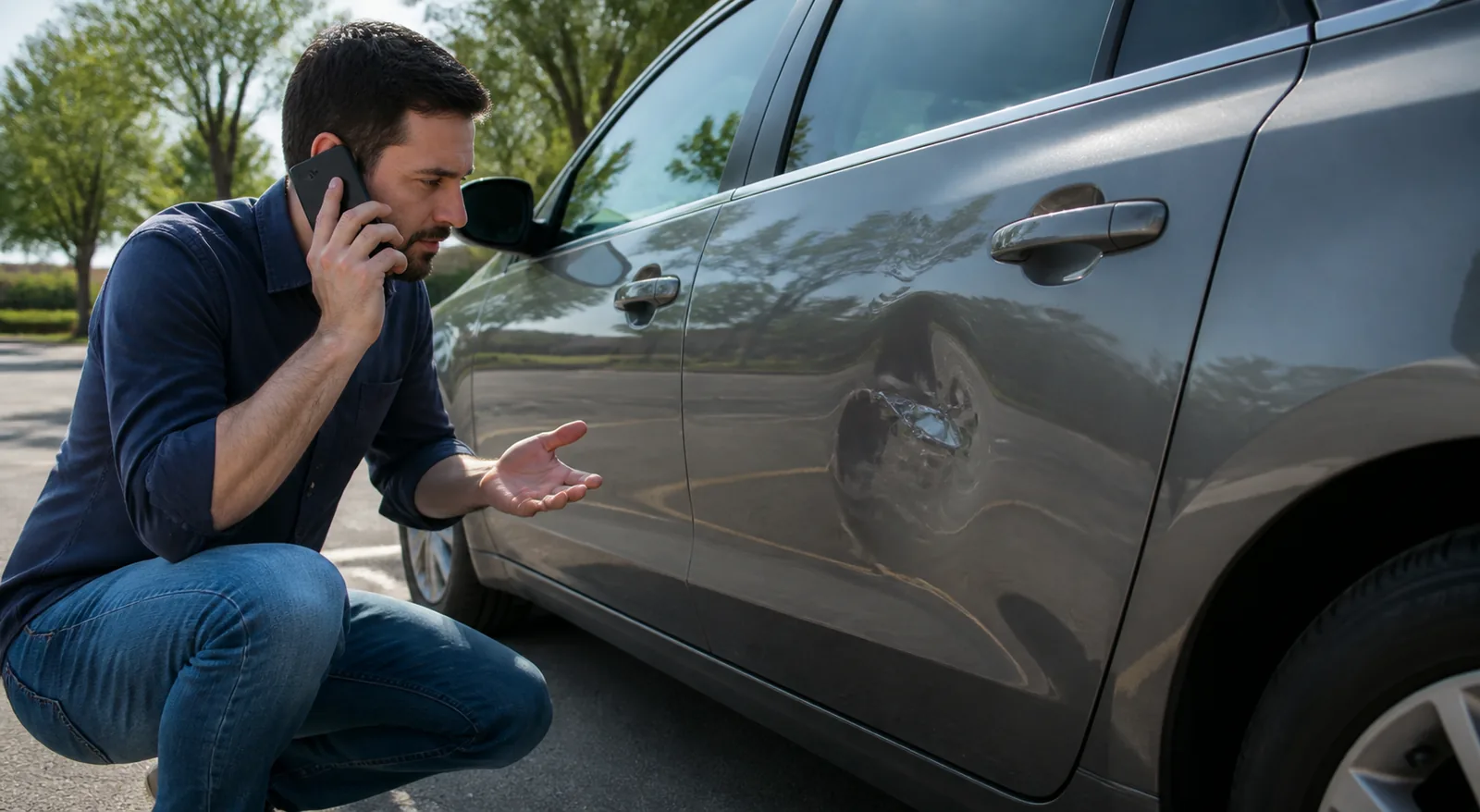
Short answer: yes, for most Texas drivers. Uninsured and underinsured motorist coverage is the only part of your policy that pays for your injuries when the at-fault driver has no insurance or not enough. Texas has a meaningful uninsured population and a low minimum liability requirement, which means both scenarios are common.
Most drivers who do not have this coverage did not decide against it. They declined it in writing during an application they were rushing through, or accepted a quote where it had already been rejected to make the premium look better.
This guide explains what it does, why the Texas minimum makes it more important here than in many states, and how to size it.
The problem it solves
Your liability coverage pays for damage you cause other people. It does nothing for you.
If another driver runs a red light, injures you, and has no insurance, the sequence without uninsured motorist coverage is:
- Your collision coverage repairs your car, minus your deductible.
- Your health insurance handles your medical bills, minus your deductible and coinsurance.
- Your lost wages, out-of-pocket medical costs, and pain and suffering are yours.
- You can sue the at-fault driver, who by definition could not afford insurance and likely cannot afford a judgment.
With uninsured motorist coverage, your own policy steps into the position the at-fault driver's insurance should have occupied.
The two coverages
They are related but distinct, and in Texas they are commonly sold together.
Uninsured motorist (UM) applies when the at-fault driver has no liability insurance at all, or in many cases when they cannot be identified, such as a hit-and-run.
Underinsured motorist (UIM) applies when the at-fault driver has insurance but not enough to cover your damages. This is the more common scenario, and it is the one drivers understand least.
Both are further divided:
UM/UIM bodily injury covers your injuries, your passengers' injuries, lost wages, and pain and suffering.
UM property damage covers your vehicle, and typically carries its own deductible.
You can carry one without the other, which is worth checking on your declarations page.
Why Texas makes this more important
Two structural facts.
The minimum is low. TDI describes the Texas minimum liability policy as paying at most $30,000 for medical bills per person, $60,000 per accident, and $25,000 for property damage. A large share of Texas drivers carry exactly that.
Now consider a moderate accident. An emergency room visit, imaging, a short hospital stay, and follow-up care can exceed $30,000 without anything catastrophic happening. If the at-fault driver carries minimum limits, their policy pays $30,000 and stops. Your remaining medical costs, lost income, and pain and suffering have no source. That is underinsured, and it does not require the other driver to be irresponsible. It only requires them to have bought the legal minimum.
Uninsured drivers are common. Texas has a meaningful uninsured driver population. When one of them causes your accident, there is no liability policy at all.
Between those two facts, the odds that an at-fault driver cannot fully cover your damages are considerably higher than most people assume.
What it actually pays for
This is where UM/UIM differs from your other coverages in a way that matters.
Collision repairs your car. It does not pay your medical bills, your lost wages, or anything for the months of recovery.
Health insurance pays medical providers, subject to your deductible and coinsurance. It does not pay lost income and it does not compensate you for the injury itself. It may also assert a lien against any recovery you obtain.
Personal injury protection pays a limited amount of medical costs and lost income regardless of fault. It is usually a modest limit.
UM/UIM bodily injury is the coverage that pays what a liability policy would have paid: medical costs, lost wages, future medical needs, and pain and suffering, up to your limit.
That last category is the one nothing else covers.
Hit-and-run
This is one of the most common uses of the coverage and one people do not anticipate.
If a driver hits you and leaves, there is no one to pursue. UM coverage generally responds, subject to policy conditions that usually include prompt reporting to police. Some policies require physical contact between the vehicles, which matters if you were run off the road by a driver who never touched you. Ask your agent how your policy treats that.
The practical takeaway: call police at the scene of a hit-and-run, even a minor one, because the report is typically a condition of the claim.
How much to carry
The usual guidance is to match your UM/UIM limits to your liability limits, and that is a reasonable default. Two refinements:
Think about who it protects. Your liability limits protect your assets from claims by others. Your UM/UIM limits protect you and your family. Households sometimes conclude those deserve different amounts, and it is a legitimate conversation.
Consider your household. If you regularly drive with children or family members in the car, the coverage extends to passengers. A single accident injuring multiple family members can exhaust a modest limit quickly.
Check umbrella availability. Some personal umbrella policies offer excess UM/UIM, extending this protection above your auto limits. Not all carriers offer it, and some require specific underlying limits. If you carry an umbrella or plan to, ask about it specifically, because it is frequently optional and easy to miss.
The written rejection
In Texas, UM/UIM must be offered and must be rejected in writing. That requirement exists to prevent exactly what happens anyway: drivers ending up without it and not knowing.
Two actions worth taking:
Check your declarations page. Look for UM or UIM lines with limits. If you see nothing, or you see "rejected," you do not have it.
Reconstruct how that happened. If you bought online or moved quickly through an application, the rejection may have been a checkbox. Adding it back is usually inexpensive relative to what it provides.
What it costs
UM/UIM is generally among the less expensive coverages on an auto policy, because it sits behind the at-fault driver's insurance and only responds when that fails.
It is worth quoting rather than assuming. Ask your agent to show you the premium with and without it, at a couple of limit options. Most drivers find the difference smaller than they expected, particularly relative to the protection.
How a UM/UIM claim works
Worth understanding, because it is different from a normal claim.
You are making a claim against your own insurer. That is an unusual position, because your carrier is standing in for the at-fault party. The relationship is more adversarial than a comprehensive claim, since your insurer is evaluating what the other driver would have owed you.
UIM usually requires exhausting the at-fault driver's limits first, and typically requires your carrier's consent before you settle with the other driver. Settling with the at-fault driver's insurer without notifying your own carrier can jeopardize your UIM claim. This is a real trap.
Documentation matters. Medical records, wage loss documentation, and the police report all support the claim.
Report to your own carrier promptly, even if the other driver appears to have coverage, because you may not learn their limits are inadequate until later.
Who should not skip it
- Anyone driving in dense metro traffic, where accident frequency is higher.
- Households with children or family regularly in the vehicle.
- Drivers with high-deductible health plans, where an injury means real out-of-pocket cost.
- Anyone whose income would be affected by weeks or months off work.
- Drivers with meaningful assets or future earnings.
- Frankly, most drivers. The scenarios this covers are common and the coverage is inexpensive.
UM property damage, and the deductible question
The bodily injury side gets most of the attention, but the property damage side has its own wrinkle worth understanding.
Uninsured motorist property damage covers your vehicle when an uninsured driver damages it. In Texas it typically carries its own deductible, often a few hundred dollars.
The question that comes up: if I already have collision coverage, do I need UM property damage?
Both can repair your car. The differences:
- Deductible size. UM property damage deductibles are often lower than collision deductibles, so using it can cost you less out of pocket.
- Claim characterization. A UM claim is inherently not-at-fault, whereas a collision claim requires establishing that another party was responsible before your carrier pursues reimbursement.
- If you carry liability only, UM property damage is your only route to repairing your vehicle after an uninsured driver hits you.
If you carry collision with a low deductible, UM property damage adds less. If you carry liability only, or a high collision deductible, it adds meaningfully.
Stacking UM/UIM with your other coverages
It helps to see how the pieces fit together after a serious accident caused by an underinsured driver.
Assume your damages total $180,000 and the at-fault driver carries Texas minimum limits.
- Their liability pays its $30,000 per-person bodily injury limit and is exhausted.
- Your PIP or medical payments, if carried, pays its limit toward medical costs and lost income regardless of fault.
- Your health insurance pays covered medical costs, subject to your deductible and coinsurance, and may assert a lien against your recovery.
- Your UIM bodily injury responds for damages above the at-fault driver's exhausted limit, up to your UIM limit.
- An umbrella with excess UM/UIM, if you have one and it offers that feature, sits above your auto UIM limit.
- Anything above all of that is uncompensated.
Notice how much work step 4 is doing. Without UIM, the sequence goes from step 3 straight to step 6, and the gap is the entire difference between a covered loss and an uncovered one.
Notice also that step 5 is optional and frequently unavailable. If excess UM/UIM matters to you, it needs to be confirmed with the umbrella carrier specifically rather than assumed.
Common misconceptions
"I have full coverage, so I am fine." Full coverage is informal shorthand for liability plus collision plus comprehensive. None of those pay for your injuries, lost wages, or pain and suffering when someone else is at fault and cannot pay. UM/UIM is a separate election.
"My health insurance covers my injuries." It pays medical providers, subject to your deductible and coinsurance, and it may assert a lien against any recovery you obtain. It does not replace lost income and it does not compensate you for the injury itself.
"I can just sue the driver." You can, and a judgment against someone who could not afford minimum insurance is frequently uncollectible. A judgment is a piece of paper, not a payment.
"It only matters if the other driver has nothing." Underinsured is the more common scenario. A driver carrying the Texas minimum has insurance and still cannot cover a serious injury.
"It is expensive." It is generally among the less expensive coverages on the policy, because it sits behind the at-fault driver's insurance. Quote it before assuming.
"My passengers are covered by their own policies." Your UM/UIM generally extends to occupants of your vehicle. Their own policies may also respond, but relying on that is not a plan.
What to do this week
- Pull your declarations page. Look for lines labeled UM, UIM, uninsured motorist, or underinsured motorist.
- If you see nothing or "rejected," you do not have the coverage.
- Ask your agent to quote it at limits matching your liability, and at one tier higher.
- Ask whether UM property damage is included and what its deductible is.
- If you carry an umbrella or want one, ask whether excess UM/UIM is available from that carrier.
- Confirm every household driver is listed, since coverage generally extends to family members.
This is a fifteen-minute exercise that closes one of the largest and least understood gaps in most Texas auto policies.
The reframe that helps
People evaluate UM/UIM as an optional extra, which is the wrong frame. It is better understood as the coverage that makes sure someone is insured for your injuries.
You have no control over whether the driver who hits you carries adequate limits. You cannot verify it in advance, and Texas law lets them carry very little. The only lever you have is buying the coverage that fills the gap when they cannot.
Pull your declarations page and look for the UM and UIM lines. If they are missing or rejected, that is worth a conversation before your next renewal rather than after an accident.
Request a policy review with your declarations page to compare the cost of adding or raising UM/UIM and see how it fits with your liability limits and any umbrella you carry.
Related resources
How Argo can help
Not sure how this guide applies to you? A licensed Argo agent can review your situation in English or Spanish.
- Review your current policy or insurance requirement
- Explain coverage choices, limits, and deductibles
- Help you start a quote or plan the next step