
Commercial Roof Limitation Endorsements in Texas
Short answer: a commercial roof limitation endorsement narrows how your policy pays for roof damage while leaving the rest of the building on broader terms. It does not remove roof coverage, but it can shift a large share of a wind or hail loss onto you. The endorsement form number on your declarations page, not the label, tells you how much.
Texas commercial property underwriting often treats roof age, roof condition, and wind or hail exposure as separate questions. A carrier may offer replacement cost on the building while settling the roof differently, or it may attach another roof-specific limitation. The result can be broader coverage for the structure and narrower terms for the roof.
This can be a reasonable trade in some cases and an expensive surprise in others. The difference is whether the owner understood the endorsement before the storm. A form number on a renewal declarations page is easy to miss unless the owner compares the new forms with the expiring policy.
The three shapes these endorsements take
The phrase roof limitation endorsement is not a form name. It is shorthand for several different mechanisms, and they are not interchangeable.
Actual cash value settlement on the roof only. The building is insured at replacement cost, while the roof is settled at depreciated value. This is not the same as removing roof coverage.
Cosmetic damage limitation. Some forms exclude hail damage that changes appearance without meeting the form's functional-damage threshold. These endorsements are form-specific, and a residential form should not be used to infer commercial terms.
A scheduled payment table by roof age. A percentage of replacement cost is paid based on the roof's age and material at the time of loss. These schedules vary enormously between carriers and are the least standardized of the three.
A policy can carry more than one. A building with an impact resistant roof might receive a premium credit and a cosmetic damage exclusion in the same breath. Reading one endorsement and stopping is how owners end up surprised twice.
What actual cash value on the roof actually costs you
Replacement cost pays what it takes to replace the damaged property. Actual cash value pays the depreciated value. The gap between them is the part you fund.
On a roof, that gap is a function of age and expected service life, and it grows every year without anything changing on the policy. A roof most of the way through its useful life can depreciate to a fraction of replacement cost. The deductible then comes off what is left.
Texas commercial wind and hail deductibles are frequently stated as a percentage rather than a dollar amount, and that compounds the effect. TDI's deductible guidance makes the arithmetic plain with a residential example: a policy with a 5 percent deductible on a property insured for $150,000 carries a $7,500 deductible, so a $6,500 repair pays nothing at all. Apply the same mechanic to a commercial building insured for several million and the deductible alone can exceed a full roof replacement. TDI notes that in general a higher deductible means a lower premium, which is exactly why these structures get sold.
Stack a percentage deductible on top of depreciated roof settlement and the honest question is no longer whether the roof is covered. It is whether a roof claim would ever produce a meaningful payment. For some buildings the answer is no, and the owner should know that before the hail rather than after.
The replacement cost versus actual cash value explainer covers the underlying distinction, and the wind and hail deductible guide covers how percentage deductibles are calculated in Texas.
The definition of roof is where the money is
This is the part almost nobody reads, and it is the part that decides the number.
TWIA's commercial Endorsement 165, titled Replacement Cost Coverage and Actual Cash Value Roofs, provides replacement cost treatment for Coverage A building and Coverage B business personal property while expressly excluding roofs from that treatment. Its definition of roofs is worth reading in full, because it is far broader than surfacing:
- Roofs and all materials required for replacement of a roof and related building components, including underlayment, fasteners, flashing, and waterproofing
- Previous roof layers, insulation boards, and decking
- Vents and roof-mounted equipment or other structures
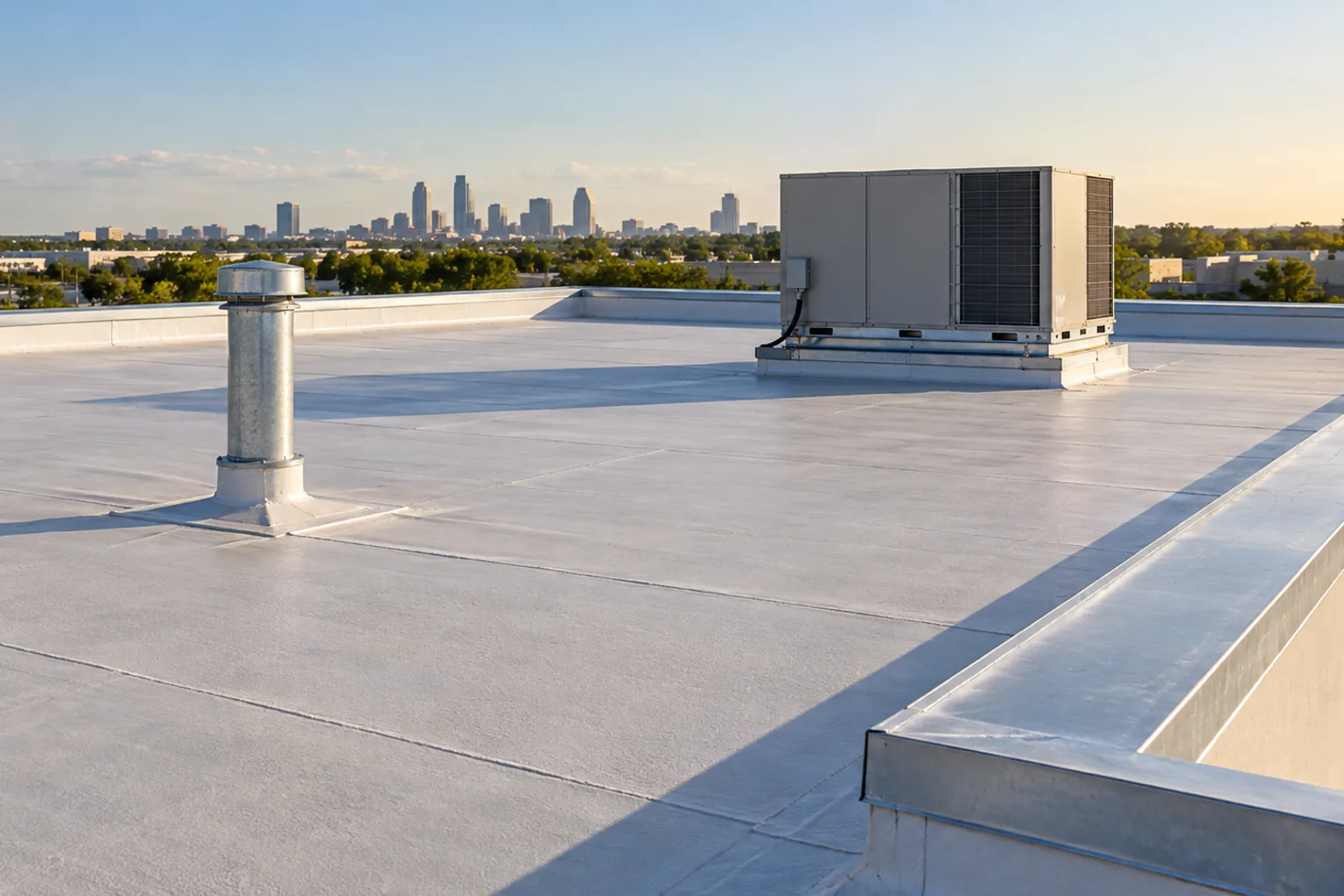
Read that third line again. Rooftop HVAC units, exhaust fans, and similar equipment fall inside the roofs definition on that form, which means they are outside the replacement cost treatment the endorsement otherwise provides. On a building with significant rooftop mechanical equipment, that is not a footnote.
Definitions differ by form and by carrier. Some limit the carve-out to roof coverings only, meaning the exposed roofing material, the underlayments applied for moisture protection, and the flashings required for replacement. Others reach decking and equipment the way Endorsement 165 does. The gap between those definitions can materially change a claim on a building with substantial decking or rooftop equipment.
So the question to ask is never "does my policy have a roof endorsement." It is "what does this endorsement define as the roof."
Cosmetic damage exclusions are form-specific
Some property policies use cosmetic damage exclusions, but the exact form and line of business matter. A residential endorsement is not proof of what a commercial property policy says.
TWIA Form 420 is a residential example. It excludes hail damage that changes the appearance of a roof covering without allowing water penetration or causing the covering to fail at keeping out the elements over time. The form states that hail damage meeting those functional thresholds remains covered.
That residential form defines roof covering as the material exposed to weather, moisture-protection underlayments, and flashings required for replacement. Its definition is narrower than the commercial TWIA Endorsement 165 definition of roofs, which reaches decking and roof-mounted equipment.
Two procedural points matter for the residential TWIA form, but they should not be carried over to a commercial policy without reading the commercial endorsement.
Eligibility is tied to an impact resistant roof credit. TWIA's rules make Form 420 available only for a residential risk eligible for and receiving the applicable impact-resistant roof credit.
The insured signs the TWIA form. TWIA-420 is void unless signed by the named insured, although TWIA may retain an electronic record of the signed form. A commercial endorsement may have different execution requirements.
For a commercial renewal, ask for the exact cosmetic-damage form, the roof materials it covers, the causes of loss it addresses, and its definition of functional damage. Documenting roof condition before storm season can also help establish what changed after a loss.
Why carriers use these endorsements
Being candid about the carrier's side makes the trade easier to evaluate.
TWIA's own description of its commercial replacement cost excluding roof coverings option is that it exists for insureds and applicants who have an otherwise insurable commercial structure but are declined replacement cost coverage because of the condition of the structure's roof, allowing them to obtain replacement cost coverage for the building but not the roof until the roof is repaired or replaced.
That is the stated purpose of this TWIA option. For an owner with an older roof on a building they intend to keep, accepting depreciated roof settlement in order to retain replacement cost on the rest of the structure can be a workable choice. It still leaves the owner responsible for understanding and funding the gap.
Do not assume a particular premium credit from a different policy or line of business. Ask for the commercial quote both with and without the roof limitation when alternatives are available, then compare the dollar savings with the claim amount the endorsement could shift back to the owner.
Questions to ask before you accept one
Take these to the renewal conversation, not to the claim.
Which form number is on my declarations, and can I have a copy? The label on a proposal summary is not the endorsement. Ask for the actual form.
What does the form define as the roof? Surfacing only, or decking and rooftop equipment as well?
Is settlement actual cash value, a scheduled percentage, or an exclusion? These are different mechanisms with different math.
If it is a schedule, what does the table say at my roof's current age? And what will it say in three years?
What is my wind and hail deductible, and is it a percentage or a flat amount? A percentage deductible plus depreciated roof settlement is the combination that produces a zero dollar claim.
Was this endorsement on last year's policy? Renewals add endorsements quietly. Compare declarations pages year over year rather than assuming continuity.
What are the terms without the endorsement? A higher premium, a higher deductible, a different carrier, or no offer. Get the alternative priced rather than guessing.
What would remove it? A documented roof replacement, an inspection, a specific roof age threshold. Ask what evidence the carrier accepts and whether removal can happen mid term.
Does my lender or lease require replacement cost on the whole building? A loan covenant or a landlord's insurance clause may require terms the endorsement takes away, which turns an underwriting question into a default question.
If the building is leased, who is responsible for the roof? In a triple net lease the tenant may be paying for insurance that will not fund a roof replacement the lease makes them responsible for.
What to do with an older roof
The endorsement is a symptom. The roof is the condition.
Document what you have now. Roof age, material, installation records, permits, prior repairs, and dated photographs from a recent inspection. Underwriters price uncertainty, and an undocumented roof is uncertainty.
Get a professional condition assessment, not a free inspection from whoever knocked. A written report with photographs and remaining service life estimates is the document that moves a renewal.
Maintain the drains and the flashings. Keep inspection and repair records. Wear, deterioration, and maintenance issues can affect both underwriting and a later coverage analysis under the issued policy.
Price replacement against the coverage gap. If depreciated settlement plus a percentage deductible means a roof claim pays little, the insurance is not funding the roof either way. Replacing it on your own schedule and then renegotiating terms is often cheaper than carrying the gap indefinitely.
Treat impact resistant materials as a two sided deal. They can earn a premium credit, and in Texas that credit may come attached to a cosmetic damage exclusion. Both halves belong in the analysis.
Compare the whole structure at renewal, not the premium. A lower premium with depreciated roof settlement, a broad roofs definition, and a 5 percent deductible is not a better deal than a higher premium with replacement cost roof coverage. It is a different deal, and only one of them replaces a roof.
The commercial property insurance cost guide covers the other underwriting factors that drive Texas commercial property pricing, and TDI's windstorm insurance overview explains how wind and hail coverage is structured in coastal counties where TWIA is in play.
A roof endorsement review checklist
- Do you have the actual endorsement form, with its form number and edition date?
- Does the form define roof as surfacing only, or does it include decking and roof-mounted equipment?
- Is the mechanism actual cash value, a scheduled percentage by age, or a cosmetic damage exclusion?
- What is the roof's age and material, and is that documented?
- What is the wind and hail deductible, and is it a percentage of the building limit?
- Run the arithmetic: depreciated roof value, minus the deductible. Is the result a number worth claiming?
- Did the endorsement appear this renewal, or was it always there?
- If it is a cosmetic damage exclusion, is it tied to an impact resistant roof credit, and did you sign it?
- What are the premium and terms without the endorsement?
- What evidence would the carrier accept to remove it?
- Does a lender covenant or lease clause require broader terms than the policy now provides?
- In a leased building, does the lease assign roof replacement responsibility to a party whose insurance will not fund it?
- Are dated photographs and a written condition report on file before storm season?
Frequently asked questions
What is a commercial roof limitation endorsement?
It is a broad label for an endorsement that narrows how a commercial property policy settles roof damage while leaving other building property on different terms. Common mechanisms include actual cash value, an age-based schedule, or another stated limitation. The endorsement number and wording control.
Does an actual cash value roof endorsement mean the roof is not covered?
No. Actual cash value generally means the covered roof loss is settled after depreciation, subject to the deductible and other policy terms. TWIA Endorsement 165 is one commercial example: it provides replacement cost treatment for specified building property while excluding roofs from that treatment.
What counts as the roof under one of these endorsements?
Read the definition in the form. TWIA Endorsement 165 includes roof-replacement materials, prior layers, insulation boards, decking, vents, and roof-mounted equipment or structures. Another carrier's form may define the term differently.
How does a cosmetic damage exclusion work?
It removes coverage for damage that changes appearance without meeting the form's functional-damage threshold. The wording is form-specific. TWIA-420 is a residential example, not a commercial form, so a commercial owner should review the exact endorsement attached to the business policy.
Can I decline a roof endorsement at renewal?
Sometimes an alternative is available, and sometimes the carrier will not offer broader roof terms for that building. Ask for the terms, deductible, premium, and underwriting requirements with and without the endorsement before deciding.
Does replacing the roof remove the endorsement?
Not automatically. A documented replacement may change underwriting at renewal, but the carrier decides what evidence it needs and when revised terms can take effect. Ask whether a permit, invoice, photographs, inspection, or proof of material is required.
Where Argo fits
Argo Insurance can pull the actual roof endorsement off a Texas commercial property policy, read its definition of roof, and walk through what a wind or hail claim would look like under those terms alongside the deductible that applies. That conversation is worth having at renewal, when the alternatives can still be priced.
Start with an insurance policy review if a renewal added terms you did not expect, or a commercial insurance quote if you want the market compared with and without a roof carve-out. Owners of older residential roofs should read the older roof home insurance page instead, since the residential market handles this differently.
Coverage descriptions here are general. Limits, exclusions, endorsements, and eligibility vary by carrier, and the policy issued controls.
Related resources
How Argo can help
Not sure how this guide applies to you? A licensed Argo agent can review your situation in English or Spanish.
- Review your current policy or insurance requirement
- Explain coverage choices, limits, and deductibles
- Help you start a quote or plan the next step