
How to File a Car Insurance Claim: Step-by-Step
Short answer: report promptly, document thoroughly, cooperate fully, and understand what your deductible and coverage limits mean before you decide to file. Late reporting and poor documentation cause more claim problems than coverage disputes do.
Most people file two or three claims in their entire lives, which means the process is unfamiliar exactly when they are stressed and least able to learn it. Knowing the sequence in advance removes most of the friction.
This guide covers the auto claim process from first notice through settlement, and what to do when things go sideways.
Step 1: Report promptly
Report as soon as reasonably possible. Most policies contain a notice condition, and a seriously delayed report can create a coverage problem independent of whether the loss itself was covered.
Report even if you are not sure you want to file. Reporting and filing are different acts. Notifying your carrier of an incident preserves your rights. Deciding not to pursue it is a separate decision you can make later.
Report especially if another party was involved. That claim may develop months later, and your carrier needs to know it exists.
Have ready:
- Your policy number
- Date, time, and location of the loss
- A factual description of what happened
- Police report number, if any
- Other parties' names, contact details, and insurance information
- Names of any witnesses
- Photographs
Most carriers accept claims by phone, app, or website. Your agent can also open the claim and often provides more useful guidance on the first call than an automated intake will.
Step 2: Decide whether to actually file
For a small loss, this deserves a moment of thought.
Do the arithmetic. Compare the repair estimate to your deductible. A $1,100 repair against a $1,000 deductible produces a $100 payment. That is rarely worth a recorded claim.
Consider frequency. Carriers look at total claim history, not just at-fault accidents. Multiple claims in a short window affect renewal pricing and, on property, can affect whether a carrier renews you at all.
File regardless when:
- Anyone was injured
- Another party's property was damaged
- Fault is disputed
- The other driver is uninsured
- The damage may be worse than it looks
You cannot reliably assess hidden structural or mechanical damage from the outside, and injuries frequently surface days later. When another person is involved, file.
Step 3: Document everything
Documentation is what turns a disputed claim into a straightforward one.
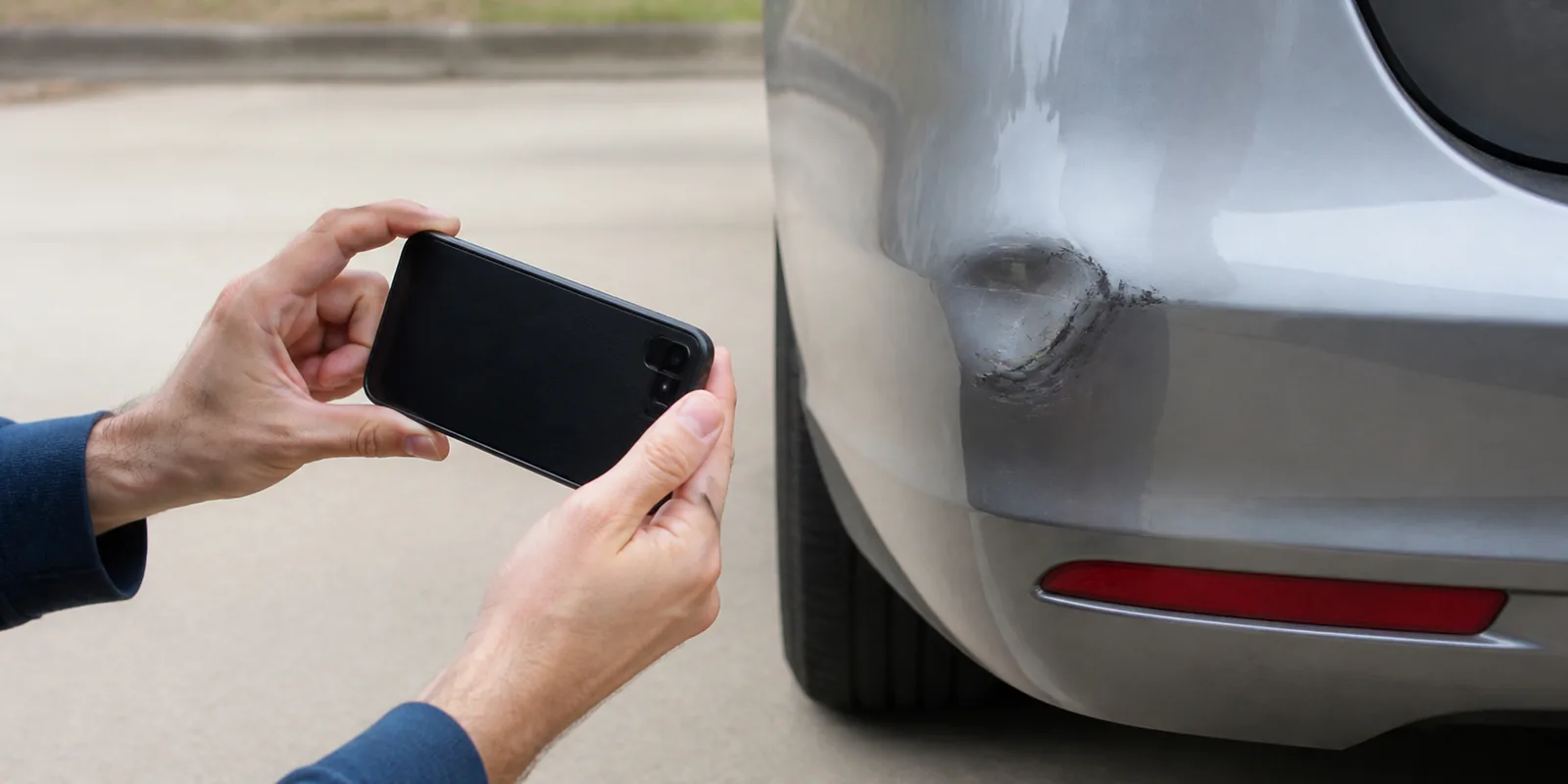
- Photographs of all damage, from multiple angles and distances, in good light
- Wide shots showing context, not just close-ups
- The scene, if applicable, before anything is moved
- Medical records and bills, if there are injuries
- Repair estimates, and keep every one you obtain
- Receipts for towing, rental, and any out-of-pocket costs
- A written timeline of what happened, made while it is fresh
Start a call log. Record the date, the name of every person you speak with, their reference or extension, and a summary. Claims that run for months become much easier to manage with contemporaneous notes, and the log itself becomes useful if you ever need to escalate.
Step 4: The adjuster
An adjuster is assigned to investigate, evaluate coverage, determine the amount of loss, and negotiate settlement.
What they will do:
- Contact you, usually within a few business days
- Inspect the vehicle, or request photographs for a virtual inspection
- Review the police report
- Contact other parties and witnesses
- Determine liability, if that is at issue
- Prepare an estimate
What to do:
- Return their calls. TDI notes that a company will nonrenew a policy when the insured does not cooperate with a claim investigation. This is entirely avoidable.
- Be factual. Describe what happened without speculating about fault or about damage you have not verified.
- Ask for the estimate in writing, and read it. Estimates sometimes miss damage that only becomes visible during teardown.
- Ask what is and is not included, particularly whether the estimate assumes aftermarket or used parts.
On recorded statements: you are generally required to cooperate with your own insurer, which can include a recorded statement. You are not obligated to give a recorded statement to the other party's insurer, and doing so before you understand the extent of your injuries can work against you.
Step 5: Repairs
You choose the repair facility. Your insurer may recommend shops in a direct repair program, which often streamlines the process and may come with a workmanship guarantee. You are not required to use them.
Understand the parts question. Estimates may specify original equipment, aftermarket, or recycled parts. Policy language governs what the insurer owes. If you want original equipment parts and the estimate does not provide for them, raise it before repairs begin.
Supplements are normal. When a shop disassembles a vehicle, they frequently find damage the initial estimate missed. The shop submits a supplement to the adjuster. This is routine, not a problem, though it adds time.
Do not authorize repairs before the adjuster has inspected or given you authority to proceed, except for genuine emergency measures to prevent further damage.
Step 6: Settlement
On a repairable vehicle, the insurer pays the repair cost minus your deductible. Payment may go to you, to the shop, or to both, and if you have a lienholder they may be named on the check.
On a total loss, the insurer pays the vehicle's actual cash value minus your deductible. Actual cash value is what the vehicle was worth immediately before the loss, not what you paid and not what a replacement costs today.
Two things to know about total losses:
- You can contest the valuation. Ask for the valuation report showing the comparable vehicles used. If the comparables are meaningfully different from your vehicle in mileage, condition, trim, or options, say so and provide evidence.
- If you owe more than the settlement, the difference is yours unless you carry gap coverage.
On an injury claim, do not settle until you understand the full extent of your injuries. A settlement includes a release, and once signed, the claim is closed permanently even if you need further treatment.
If your claim is denied or underpaid
Get the reason in writing. A verbal explanation is not enough to work from.
Read the cited policy language yourself. Denials rest on specific provisions. Sometimes the provision does not apply to your facts, and sometimes the adjuster was working from an incomplete understanding of what happened.
Provide additional information. Many denials and low evaluations come from missing documentation rather than genuine disagreement. A second estimate, additional photographs, or a medical record can change the outcome.
Ask for reconsideration and escalate. Request a supervisor review. Adjusters carry heavy caseloads and second reviews frequently produce different results.
Consider the appraisal clause on property claims. Many policies contain a provision allowing each side to appoint an appraiser to resolve a dispute over the amount of loss, without litigation. It does not resolve coverage disputes, only valuation.
File a complaint with TDI. If you believe the claim was handled unfairly, the Texas Department of Insurance accepts consumer complaints. Filing a complaint does not resolve the claim by itself, and it does create a record and frequently prompts a more careful review.
Timelines
Claim handling is subject to statutory deadlines in Texas covering acknowledgment, requests for information, acceptance or rejection, and payment after acceptance. The specifics depend on the type of claim and the circumstances.
Practical expectations:
- Simple repairable auto claim: days to a few weeks, depending on parts and shop capacity.
- Total loss: additional time for valuation and title processing.
- Disputed liability: longer, because the investigation has to establish fault.
- Injury claim: frequently months, because it should not settle until treatment concludes and the outcome is known.
- After a widespread catastrophe: everything stretches. Adjuster availability, contractor availability, and parts supply are all constrained at once.
Things that go wrong, and how to avoid them
Waiting to report. The most common avoidable problem.
Not photographing before cleanup or repair. Once the evidence is gone, it is gone.
Accepting the first offer without reading the estimate.
Signing a release before treatment is complete.
Settling with the other driver's insurer without notifying your own carrier, which can jeopardize an underinsured motorist claim.
Handling it privately with cash. Damage exceeds estimates and injuries appear late.
Assigning your claim benefits to a contractor without understanding what you signed away. This shows up frequently after storms.
Losing track of correspondence. Keep everything.
Property claims work differently
Most of this guide describes auto claims. Home and property claims share the structure and differ in several ways worth knowing.
Mitigation is your obligation. Policies generally require you to take reasonable steps to prevent further damage. Tarping a roof, shutting off water, and boarding a broken window are expected. Keep receipts, because those costs are typically reimbursable.
Do not begin permanent repairs before inspection, except for genuine emergency measures.
Replacement cost claims pay in two stages. TDI explains that with replacement cost coverage the company pays with two checks: a partial payment first, with the balance sent after repairs have begun. That withheld amount is recoverable depreciation, and you generally forfeit it if you take the first check and never repair. There is usually a deadline for completing the work.
Deductibles are larger and sometimes percentage-based. A Texas wind and hail deductible is frequently a percentage of the dwelling limit rather than a flat amount, which on a $400,000 home at 2 percent is $8,000.
Multiple policies can be involved. A hurricane can trigger a homeowners claim, a separate windstorm claim, and a separate flood claim, each with its own adjuster, deductible, and deadlines. Filing one does not notify the others.
Be careful with post-storm contractors. Storm-chasing operations appear quickly after Texas hail events. Confirm any contractor with your adjuster, get the scope in writing, and understand exactly what you are signing before assigning any claim benefits.
Who else can help
Your agent. An independent agent works for you rather than the carrier and can often intervene when a claim stalls. This is one of the practical differences between an independent agency and a direct-to-consumer purchase, and it shows up precisely when things go wrong.
A public adjuster. Licensed in Texas to represent policyholders on property claims for a fee, typically a percentage of the settlement. They can add value on large or complex losses. Verify the license, read the contract carefully, and understand the fee before signing. Be wary of anyone soliciting door to door after a storm.
An attorney. Appropriate for significant injury claims, disputed liability, or a bad faith situation. Most work on contingency for injury matters.
The Texas Department of Insurance. Accepts consumer complaints, and its Help Line at 800-252-3439 can confirm whether a company or adjuster is licensed.
Escalating early is usually better than escalating late. A claim that has already been closed is harder to reopen than one still in progress.
A claim file template
Keep these in one folder, physical or digital, from the first day.
- Claim number and the carrier's claims phone number
- Adjuster name, direct line, and email
- Police report number and the responding agency
- Every photograph, with the date taken
- Your written account of what happened, made within 24 hours
- Every repair estimate received
- All medical records, bills, and explanations of benefits
- Documentation of missed work and lost income
- Receipts for towing, rental, storage, and any out-of-pocket cost
- A call log with date, name, and summary of every conversation
- Copies of every letter and email in both directions
- Your declarations page
The call log is the item people skip and later wish they had. Claims that stretch across months involve multiple people, and "someone told me it was approved" is not usable. A dated note with a name is.
The short version
Report fast, photograph more than you think you need, keep a written record of every conversation, cooperate with your own carrier, be careful with the other party's carrier, and do not sign a release until you know the full extent of the loss.
If you have a claim in progress, use the carrier claims directory to reach the company handling it and keep your claim number, estimate, and declarations page together. Argo can help you identify policy terms and the appropriate carrier contact, but the carrier adjusts and decides the claim.
Related resources
How Argo can help
Not sure how this guide applies to you? A licensed Argo agent can review your situation in English or Spanish.
- Review your current policy or insurance requirement
- Explain coverage choices, limits, and deductibles
- Help you start a quote or plan the next step