
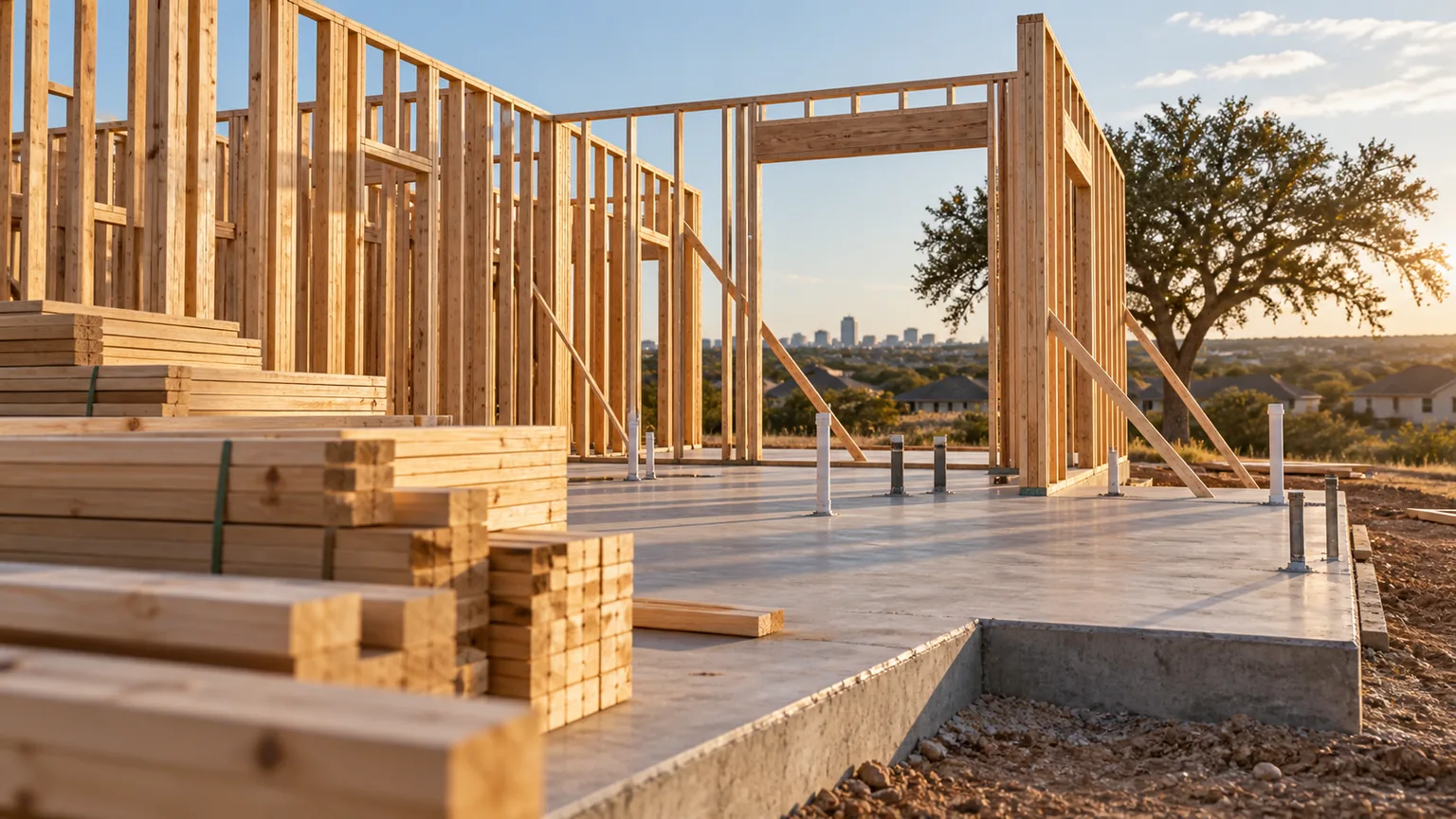
Construction Insurance in Texas: What a Jobsite Needs
Short answer: construction insurance in Texas is not a product you buy, it is a set of policies assigned across the parties on a project. General liability handles injury and damage to other people and their property. Builders risk handles the structure itself while it is being built. Workers compensation or its alternative handles the crew. Equipment and installation floaters handle what you own and what you are installing. Bonds handle the promise to perform. On a well run job every one of those has a named buyer written into the contract. On a badly run job at least one of them has nobody.
The most expensive gaps in Texas construction are not exotic. They are the ordinary ones. Nobody bought builders risk because the owner and the general contractor each assumed the other did. The subcontractor's certificate showed general liability but not completed operations. The nonsubscriber discovered what exclusive remedy was worth after an injury. None of those require bad luck, only an unread contract.
This guide walks the stack policy by policy, says who normally buys each one, names the exclusions that surprise contractors, and covers what changes on coastal jobs, residential jobs, and public jobs. If you want the pricing side rather than the coverage side, that is in contractor insurance cost in Texas.
The stack, and who normally buys each piece
Commercial general liability. Often purchased by contractors and subcontractors for their own operations. It can cover bodily injury and property damage to third parties, subject to the issued policy's terms. Check completed-operations coverage and the exclusions rather than assuming every kind of jobsite damage is included.
Builders risk or course of construction. Bought by the owner or the general contractor, depending on the contract. Covers physical loss to the structure under construction.
Workers compensation. Bought by each employer for its own employees, or declined under Texas nonsubscriber rules, except on public projects where it is required.
Commercial auto. Bought by each party for its own vehicles.
Contractors equipment and installation floater. Bought by whoever owns the equipment and whoever is installing the material.
Umbrella or excess liability. Bought by whoever the contract tells to buy it, usually the general contractor and the larger subs.
Professional liability. Bought by the designer, and increasingly by design build contractors and anyone taking delegated design responsibility.
Pollution liability. Bought by trades that disturb soil, handle fuels, or work with existing materials in older structures, because the standard general liability policy excludes most of it.
Surety bonds. Provided by the contractor, underwritten on financial strength rather than loss exposure.
A project where all of these have an assigned owner is a project where a bad day is expensive but survivable.
General liability, and the four exclusions that catch contractors
TDI publishes the coverage grant and the common exclusions in plain language, and every Texas contractor should read that page once. The grant has two halves. Premises and operations pays for bodily injury or property damage occurring on your premises or as a result of your operations. Products and completed operations pays for bodily injury and property damage occurring away from your premises and caused by your products or completed work. In construction, completed operations is the half that matters most, because the claim usually arrives after the punch list.
Now the exclusions.
Damage to your work. CGL policies generally exclude property damage to your own work. TDI's example is a homebuilder whose garage roof collapses from faulty construction after the sale, damaging the owner's vehicle. The policy may pay for the vehicle and may not pay to repair the roof, because the roof is your work. There is an exception. If a subcontractor working for you performed the work that failed, the policy may cover the damaged vehicle and also pay to repair or replace the roof. That single exception is why general contractors care so much about which work was subcontracted and whether the sub carried coverage.
Damage to your product. No coverage for property damage to your product arising out of the product. TDI's example is a propane powered appliance that malfunctions and causes a fire. The policy may pay to repair the home and will not pay to replace the appliance if it was faulty.
Contractual liability. CGL policies exclude liability you assumed by contract, with two exceptions. Liability you would have had anyway without the contract, and liability assumed in what the policy defines as an insured contract, if the injury or damage occurs after the agreement is executed. TDI's illustration is direct. If you sign a contract promising damages for missing a completion deadline, your CGL will not cover those damages. If you sign a contract to indemnify another party for that party's negligence resulting in bodily injury or property damage, the policy may cover the indemnity depending on how the agreement is worded. Construction runs on assumed liability, so this exclusion and its exceptions deserve an actual reading.
Pollution. The exclusion reaches actual, alleged, or threatened discharge, dispersal, seepage, migration, release, or escape of pollutants, with pollutant defined broadly enough to include fumes, vapors, soot, chemicals, and waste. There are carve outs, including one for injury or damage a contractor may be liable for where the premises owner has been added as an additional insured, and one for escape of fuels or lubricants necessary to operate mobile equipment. A total pollution exclusion removes all of it. If your trade has meaningful pollution exposure, TDI's own suggestion is to consider a separate pollution policy rather than relying on carve outs.
One more structural point. TDI notes that occurrence policies cover claims arising from injury or damage occurring while the policy is in force regardless of when the claim is reported, while claims made policies require the claim to be reported during the policy period unless prior acts or extended reporting coverage is purchased. Construction defect claims surface years later. Know which type you bought, and if it is claims made, know what happens to the retroactive date when you switch carriers.
Builders risk, and the gap that opens when nobody buys it
Builders risk is property insurance on the project itself. Materials, fixtures, and equipment intended to become part of the structure, usually including some coverage for materials in transit and in temporary storage, sometimes with soft cost coverage for the financing and permitting expense of a delay.
Three questions decide whether it works.
Who buys it. The contract should say, by name, and should say what limit. When an owner buys it, subcontractors are frequently named as insureds, which is worth confirming rather than assuming. When a general contractor buys it, the same question applies downstream.
What perils are in and out. Wind and hail often carry a separate percentage deductible in Texas, and flood and named storm are frequently excluded or sublimited. On a Gulf Coast project that is not a footnote.
When it ends. Builders risk terminates on some defined event. Occupancy, acceptance, final payment, or a date. The gap between when builders risk ends and when the owner's permanent property policy begins is a classic uninsured window, and it usually opens because the project finished early or late and nobody moved the dates.
If the project is a commercial building you will eventually insure permanently, the permanent side is covered in commercial property insurance cost in Texas.
Installation floaters and contractors equipment
Two coverages that get skipped on small jobs and matter enormously on the wrong one.
An installation floater covers materials and fixtures you have bought and are installing but do not yet own the building around. Rooftop units staged on a deck, switchgear in a locked container, cabinetry in a garage. The exposure sits between the owner's builders risk, which may or may not extend to your uninstalled property, and your general liability, which is not property insurance at all.
Contractors equipment, sometimes written as an inland marine floater, covers what you own and haul. Scheduled for larger items, blanket for small tools up to a limit. Two things to check. Whether values are current, because equipment bought three years ago is not worth what it costs to replace today. And whether leased or rented equipment is covered, since rental agreements routinely make you responsible for the machine and for the rental company's loss of use while it is down.
Theft from open jobsites is one exposure in this category, and site security can affect it.
Workers compensation, employer liability, and the Texas fork
Texas lets most private employers decline workers compensation. That choice has consequences beyond the premium saved.
A nonsubscriber must notify the Division of Workers Compensation. Employer E-File is one filing method, and TDI's DWC Form-005 guidance lists other submission methods. Filing is required within thirty days of hiring a first employee, within ten days of terminating coverage, and annually between February 1 and April 30. Nonsubscribers also have to post notice of no coverage in the workplace in English, Spanish, and any other language needed.
More importantly, declining coverage gives up the exclusive remedy protection. An injured employee can sue the employer directly, and the usual common law defenses are not available to a nonsubscriber. On a construction site with height, equipment, and trenching exposure, that is a large open position. The general framework is in the Texas workers compensation guide.
Public projects remove the choice. Texas Labor Code Section 406.096 requires a governmental entity entering a building or construction contract to require written certification that the contractor provides coverage for each employee on the project, with subcontractor certificates passed to the general contractor and up to the entity. Building or construction is defined broadly, covering buildings, bridges, roadways, public utility facilities, remodeling, repair, demolition, and similar improvements to real property.
Texas Labor Code Section 406.123 also allows a written agreement under which a general contractor provides coverage to a subcontractor and the sub's employees, with the agreement filed with the general's carrier within ten days of execution. Failure to file is an administrative violation. Where a general contractor with coverage hires a subcontractor who has no employees, the statute treats the general as the employer of that subcontractor.
Wrap ups, and what Chapter 151 actually governs
On larger Texas projects, coverage is sometimes consolidated. An owner controlled insurance program or a contractor controlled program buys general liability, and often workers compensation and excess, for every enrolled party on the project at once. The chapter of the Texas Insurance Code that governs consolidated insurance programs is Chapter 151, which is the same chapter that carries the construction anti indemnity rules.
Wrap ups can be efficient, and they introduce their own problems. Enrolled contractors need to know what the wrap covers, what it does not, what happens to their off site work, how the deductible or self insured retention is allocated, and what happens when the wrap's completed operations term runs out before the statute of repose does. A contractor bidding a wrapped job should not simply subtract insurance cost from the bid without reading what was actually assumed.
On the indemnity side, Chapter 151 makes a construction contract provision void and unenforceable as against public policy to the extent it requires an indemnitor to indemnify, hold harmless, or defend a party against a claim caused by the indemnitee's own negligence, breach of a statute, ordinance, governmental regulation, standard, or rule, or breach of contract. Additional insured requirements and endorsements are void to the same extent the underlying indemnity would be. The act preserves an exception for a provision requiring an employer to indemnify another party for bodily injury or death of the employer's own employee, agent, or subcontractor.
Coastal jobsites, windstorm, and the WPI-8
If the project sits in the designated catastrophe area, the windstorm inspection program is a scheduling item, not a paperwork item.
The area covers 14 first-tier coastal counties, Aransas, Brazoria, Calhoun, Cameron, Chambers, Galveston, Jefferson, Kenedy, Kleberg, Matagorda, Nueces, Refugio, San Patricio, and Willacy, along with specified Harris County communities east of State Highway 146. Check TDI's designated-area map for the exact site. Most structures there need a certificate of compliance to obtain a Texas Windstorm Insurance Association policy.
For ongoing construction, inspections are performed by a TDI inspector or a TDI-appointed Texas licensed professional engineer while the work is in progress, and a WPI-8 certificate may be issued after approval. Much of what gets inspected is covered by sheathing, insulation, and finish later, so build the inspection sequence into the schedule. If work is already complete, TDI describes a separate WPI-8-E certification path through a Texas licensed professional engineer; ask TDI or an appointed engineer whether the project qualifies and whether any work must be exposed. The general windstorm picture is in the Texas windstorm insurance guide.
Residential work and the notice clock
Residential construction in Texas runs under Texas Property Code Chapter 27. Before a claimant can begin an action against a contractor for damages arising from a construction defect, the claimant must give written notice by certified mail, return receipt requested, before the 60th day preceding the start of the action, specifying the defects in reasonable detail and providing discoverable evidence of the nature and cause of the defect and the repairs needed, including expert reports, photographs, and recordings.
The contractor then has until the 60th day after receiving the notice to make a written offer of settlement, which may include an agreement to repair, or to have an independent contractor repair, the defect at the contractor's expense or at a reduced rate, describing the repairs and the timeline in reasonable detail. Accepted repairs are generally to be made within 60 days after written acceptance, absent delay caused by the claimant or events outside the contractor's control.
The insurance point is simple and routinely missed. That notice letter is the beginning of a claim, not a customer service issue. Send it to your carrier when it arrives. Negotiating a repair on your own for two months and reporting later can create a late notice problem on top of the defect problem.
Bonds are not insurance
Surety bonds appear on construction projects constantly and they operate on different logic. Insurance is a two party contract where the carrier expects to pay losses. A bond is a three party guarantee where the surety expects not to pay, and where it has recourse against you if it does. Bonds are underwritten on credit, working capital, and financial statements, not on loss exposure.
Bid bonds, performance bonds, payment bonds, and license and permit bonds all show up in Texas construction. A contractor who wants larger public work should build a surety relationship before the job requires it, because a first bond request submitted under deadline pressure with a thin balance sheet is a bad way to start. Argo writes bonds as a separate conversation from the liability program.
What a jobsite actually needs, in order
- A contract that names who buys builders risk, at what limit, and when it terminates
- General liability for each contractor and sub as required by the project contract, with completed operations reviewed and maintained where required
- Additional insured endorsements matching what the contract asked for, not just certificate holder status
- A current certificate from every subcontractor before they set foot on site, tracked to expiration
- Workers compensation for anyone on a public project, and a documented decision either way on private work
- Commercial auto covering the trucks and trailers actually used, including hired and non owned exposure
- Installation and equipment coverage sized to what is really staged on site
- Umbrella or excess where the contract requires it, at the required attachment point
- Pollution coverage if the trade disturbs soil, fuel, or existing building materials
- Windstorm inspection sequencing built into the construction schedule on coastal jobs
- A rule that any defect notice letter goes to the carrier the day it arrives
Where Argo fits
Argo Insurance is an independent agency in Texas, and construction is one of the classes where an independent submission matters most. Appetite by trade and project type swings hard between carriers, and the spread between two defensible quotes on the same crew is routinely large.
What we will also do is read the contract before we place the policy. Most of what a jobsite needs is dictated by the agreement, not by the state, and the most expensive mistakes we see are gaps between what a contractor promised in an insurance exhibit and what the policy already on the shelf can actually produce. Send the exhibit, the schedule of values, your trade licenses, and your loss runs. Start with a contractor general liability quote, or a business insurance checkup if the whole program needs a review. If a general contractor is waiting on paper, use the certificate request page.
Coverage descriptions here are general. Rates, eligibility, limits, exclusions, and endorsements vary by carrier and by risk, and the policy issued controls.
Common questions about this coverage
Does general liability cover damage to the work I am building?
Usually not your own work. TDI states that CGL policies generally exclude property damage to your work, with an exception when a subcontractor working for you caused the damage. TDI gives the example of a garage roof that collapses from faulty construction. The policy may pay for the homeowner's damaged vehicle but may not pay to repair the roof, because the roof is your work, unless a subcontractor built it.
Who is supposed to buy builders risk, the owner or the contractor?
Whoever the contract says, which is why the contract has to say. Builders risk covers the structure under construction, along with materials and sometimes equipment at the site, and it is a property policy, not a liability policy. On owner built projects the owner often buys it. On design build and many commercial jobs the general contractor does. The failure mode is both parties assuming the other bought it and nobody actually having it when the slab floods.
What is an installation floater and do I need one?
It covers materials and fixtures you have purchased and are installing but do not yet own the building around, including while in transit and in temporary storage. A mechanical, electrical, or plumbing subcontractor with rooftop units or switchgear staged on site has real exposure that neither general liability nor the owner's builders risk reliably picks up. If your materials cost is a large share of your contract value, it is worth pricing.
Do coastal jobsites have extra requirements in Texas?
Yes. Structures in the designated catastrophe area, which covers 14 first-tier coastal counties and specified Harris County communities east of State Highway 146, generally need a certificate of compliance to obtain TWIA windstorm coverage. Schedule inspections during construction where possible. TDI also describes a WPI-8-E path for completed work through a Texas licensed professional engineer.
Can a Texas contract make me indemnify the general contractor for its own negligence?
Not fully. Texas Insurance Code Chapter 151 makes a construction contract provision void and unenforceable as against public policy to the extent it requires you to indemnify, hold harmless, or defend another party against a claim caused by that party's own negligence or breach of a statute or contract. Additional insured requirements are void to the same extent. An exception preserves each employer's responsibility for injury to its own employees.
What does a residential construction defect claim look like in Texas?
It usually starts with a notice letter rather than a lawsuit. Texas Property Code Chapter 27 requires a claimant to give the contractor written notice by certified mail, return receipt requested, before the 60th day preceding the start of an action, describing the defects in reasonable detail and providing supporting evidence. The contractor then has 60 days to make a written offer of settlement, which may include repairing the defect. Tell your carrier when the notice arrives, not when the suit does.
Verify current Texas rules
Requirements and policy forms can change. Check the current agency guidance before relying on a number or filing step:
Related resources
How Argo can help
Not sure how this guide applies to you? A licensed Argo agent can review your situation in English or Spanish.
- Review your current policy or insurance requirement
- Explain coverage choices, limits, and deductibles
- Help you start a quote or plan the next step