
Umbrella Insurance in Texas: What It Covers
Short answer: an umbrella is extra liability coverage that sits above eligible auto and homeowners policies. When a covered claim exhausts an underlying limit, the umbrella can respond up to its own limit. It can be a cost-effective way to add liability protection, subject to the policy terms and required underlying limits.
The reason is a mental accounting error. People compare the umbrella premium to the probability of a catastrophic claim, decide the probability is low, and skip it. That is the correct analysis for a small expense with a small payoff, and the wrong one for a small expense that prevents a life-altering outcome.
This guide explains how personal umbrella insurance in Texas actually works, what carriers require before selling it, and who genuinely needs one. If you want your existing limits reviewed first, start with a policy review.
How it works
An umbrella is excess liability. It has no effect until an underlying policy's liability limit is exhausted.
The sequence in an at-fault auto claim:
- You are at fault in a serious accident. Damages are assessed at $600,000.
- Your auto policy's bodily injury liability limit is $250,000 per person and $500,000 per accident. It pays $500,000 and is exhausted.
- Without an umbrella, the remaining $100,000 is your personal obligation. The plaintiff can pursue a judgment and collect against assets and future wages.
- With a $1,000,000 umbrella, it pays the $100,000 excess and you owe nothing.
The umbrella also generally pays defense costs, which matters more than people expect. Defending a serious liability suit is expensive, and on many underlying policies defense costs are paid in addition to the limit but on an umbrella they may be handled differently. Read how your specific policy treats them.
Important: an umbrella does not cover your own property. It does not repair your car, rebuild your house, or pay your medical bills. It is liability coverage, meaning it responds to what you owe someone else.
The underlying limits requirement
You cannot buy an umbrella on top of minimum limits. Carriers require you to carry stated underlying liability limits before they will sit above them.
Typical requirements:
- Auto liability commonly at 250/500/100, meaning $250,000 per person, $500,000 per accident, $100,000 property damage. Some carriers require higher.
- Homeowners liability commonly $300,000 or more.
- Uninsured and underinsured motorist at stated limits, in many cases.
- Every vehicle, home, rental property, boat, and recreational vehicle in the household must be listed and must meet the underlying requirement.
Two practical consequences. If your current limits are below the requirement, the real cost of an umbrella includes raising them, and that increase is often a meaningful share of the total. And the underlying-limit increase is frequently worth doing on its own, because the first dollars of additional liability coverage on an auto policy are inexpensive relative to what they add.
Texas minimum liability is 30/60/25. A household sitting at or near state minimums is a long way from umbrella eligibility, and is also carrying far more personal exposure than most people realize.
What an umbrella covers beyond the excess layer
Many umbrellas do more than stack on top. Depending on the form, they may provide coverage where the underlying policy provides none at all, subject to a self-insured retention, which is a deductible-like amount you pay before the umbrella responds to a claim with no underlying coverage.
Coverages commonly broader on an umbrella:
- Personal injury offenses such as libel, slander, defamation, false arrest, and invasion of privacy. These are increasingly relevant given social media and neighborhood forums.
- Liability arising outside the United States, in some forms.
- Certain landlord liability for rental properties listed on the policy.
- Liability from volunteer board service, in some forms, though nonprofit board members often need separate directors and officers coverage.
What umbrellas generally do not cover:
- Business or professional liability. Personal umbrellas exclude business pursuits. A home-based business, a side consulting practice, or a rental portfolio run as a business needs commercial coverage.
- Intentional acts.
- Contractual liability you assumed by agreement.
- Workers compensation for household employees, which is separate.
- Damage to your own property.
- Certain vehicle types not listed on the policy.
Who actually needs one
The honest test is not net worth. It is exposure.
Households with teen drivers. The single most common reason. Inexperienced drivers carry elevated accident frequency, and the liability follows the vehicle owner and the household.
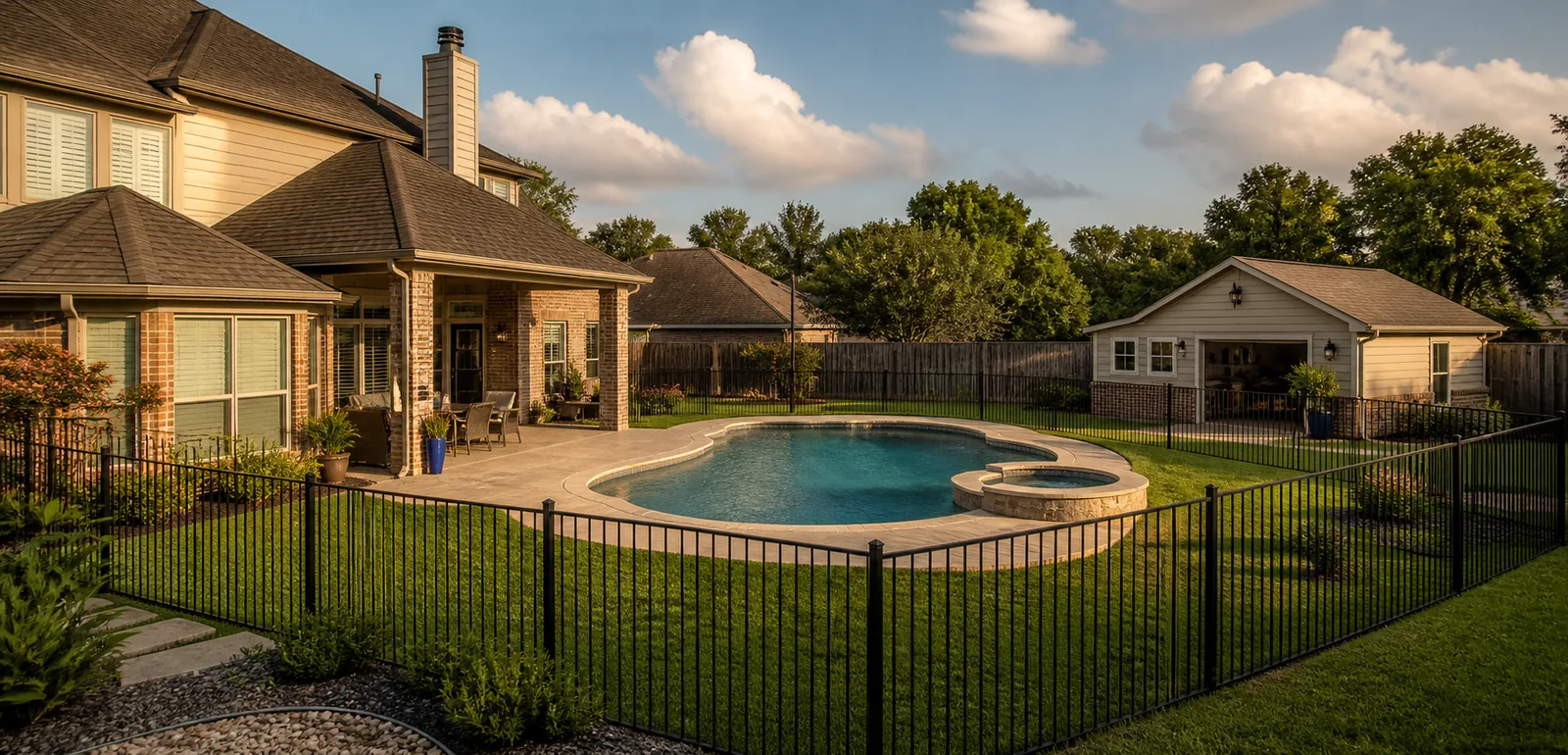
Anyone with a pool, trampoline, or diving board. Attractive nuisance exposures generate serious injury claims involving children.
Dog owners, particularly larger breeds or any dog with a history. Dog bite claims are among the most frequent homeowners liability losses.
Rental property owners. Every property is a separate liability exposure. An umbrella covering all of them is usually cheaper than raising liability on each individual policy. See the rental property insurance page.
High daily mileage drivers. Long commutes, frequent client driving, or a lot of highway time all raise the odds of a serious at-fault accident.
Households that entertain, or that have frequent guests, contractors, or short-term visitors on the property.
Anyone who serves alcohol at gatherings, given social host exposure.
Volunteers, coaches, and board members.
People with future earning capacity to protect. A young professional with modest assets and forty years of earnings ahead has a lot to lose from a judgment, because Texas homestead protections do not shield wages the way people assume.
If none of these apply and you carry solid underlying limits, an umbrella may be a reasonable thing to defer. If several apply, the calculation is not close.
Choosing a limit
Common limits are $1,000,000, $2,000,000, and $5,000,000, sold in increments.
The pricing pattern is worth knowing: the first million is the most expensive, because it is the layer most likely to be reached. Each additional million typically costs substantially less. That means the jump from $1,000,000 to $2,000,000 is often a small enough increment that going straight to $2,000,000 is the better value.
A reasonable way to size it:
- Start with net worth including home equity, investments, and savings.
- Add a realistic estimate of future earnings exposure, since judgments can be collected against wages.
- Consider your specific exposures: teen drivers, pool, dogs, rentals.
- Round up rather than down, because the incremental cost of the next layer is small.
Where umbrellas interact with other coverage
Uninsured and underinsured motorist. Some umbrellas offer excess UM/UIM, extending protection for your own injuries when the at-fault driver has inadequate coverage. Texas has a meaningful uninsured population, and this is worth asking about specifically because it is sometimes optional and sometimes unavailable. See the uninsured motorist guide.
Homeowners liability. The umbrella sits above it. Raising homeowners liability to meet the underlying requirement is usually inexpensive.
Watercraft and recreational vehicles. Boats, personal watercraft, ATVs, and RVs each need their own underlying policy at required limits before the umbrella extends to them.
Business. A personal umbrella will not cover business liability. If you own a business, the parallel product is a commercial umbrella above commercial general liability and commercial auto.
Common misunderstandings
"An umbrella replaces my other policies." It does not. It requires them, and it will not respond until they are exhausted.
"I have an LLC, so I am protected." An LLC may separate business liability from personal, but it does nothing about your driving, your dog, or an injury at your home. Those are personal exposures.
"My homestead is protected in Texas, so I have nothing to lose." Texas homestead protection is meaningful but not unlimited, and it does not protect non-exempt assets or future wages.
"I will just buy it if I ever need it." Coverage must be in force before the loss. There is no retroactive purchase.
"It is expensive." Pricing varies by household, vehicles, properties, drivers, and underlying limits. Because the umbrella responds above those required limits, it may cost less than adding the same amount of primary liability, but it still needs a real quote.
A worked example
Numbers make the case better than description.
The situation. A Texas household with two adults, one 17-year-old driver, two vehicles, a home with a pool, and a Labrador. Auto liability at 100/300/100. Homeowners liability at $300,000.
The event. The teen driver runs a red light and causes a multi-vehicle accident. Two people are seriously injured. Combined damages, including medical costs, lost wages, and pain and suffering, are assessed at $850,000.
Without an umbrella. The auto policy pays its $300,000 per-accident limit and is exhausted. The remaining $550,000 is the household's personal obligation. The plaintiffs obtain a judgment. Texas homestead protection shields the house, but non-exempt assets are reachable and the judgment can be enforced against future wages for years.
With a $2,000,000 umbrella. To buy it, the household first had to raise auto liability to 250/500/100 and homeowners liability to $500,000, which cost some additional premium. In the claim, auto pays $500,000, the umbrella pays the remaining $350,000, and defense costs are covered. The household owes nothing.
The difference between the two outcomes is a modest annual premium and a limit increase most households never bother to make. This is the entire argument.
When to revisit your limits
Umbrella and liability decisions go stale. Trigger a review when any of these happen:
- A teen starts driving. The most important single trigger.
- You buy a rental property, or start renting out a former residence.
- You install a pool, hot tub, or trampoline.
- You get a dog, particularly a larger breed.
- Your income or net worth changes materially.
- You buy a boat, ATV, RV, or personal watercraft.
- You join a nonprofit board or start coaching.
- You start a side business, which is a signal you may need commercial coverage rather than personal.
- You get married or blend households, adding drivers and vehicles.
- Your underlying policies change carriers, which can silently break umbrella eligibility if the new limits fall below the requirement.
That last one causes real problems. A household that shops auto insurance for a better price and accepts lower limits can inadvertently void the umbrella sitting above it. Any change to underlying policies should be checked against the umbrella's requirements before binding.
The questions to ask before buying
- What underlying limits does this carrier require, and what will it cost me to reach them?
- Does the umbrella include excess uninsured and underinsured motorist coverage?
- Is every vehicle, property, and watercraft in the household listed?
- What is the self-insured retention for claims with no underlying coverage?
- Are rental properties covered, and are they all scheduled?
- Are defense costs inside or outside the limit?
- What exclusions apply that are broader than my underlying policies?
- If I switch auto or home carriers, what happens to this policy?
How umbrellas differ between carriers
Umbrella forms are less standardized than auto or homeowners policies, and the differences matter.
What counts as an underlying policy. Some carriers will sit above policies written by other companies. Others require the underlying auto and homeowners to be with them. That constraint can force a broader move than you intended.
Rental property treatment. Some umbrellas include a set number of rental units without additional charge. Others require every property to be scheduled and rated individually.
Excess UM/UIM availability. Some carriers offer it, some do not, and some offer it only if you carry it at specific limits underneath.
Self-insured retention amounts for claims with no underlying coverage vary widely.
Watercraft and recreational vehicle limits. Boat length and horsepower thresholds differ, and a boat one carrier includes another may exclude.
Household member definitions. Who counts as an insured, particularly for adult children living at home or away at school, varies by form.
None of this is visible from a premium comparison, which is the argument for having someone read the forms rather than the price.
The bottom line
Liability coverage is the part of a personal insurance program that protects everything you have not yet earned. Property coverage caps out at the value of the thing insured. Liability does not cap out at anything except your policy limit.
Many households carry liability limits chosen years ago and never revisit them as income, assets, household members, and driving patterns change. An umbrella is one option for addressing that gap after the underlying policies and limits have been reviewed.
The exercise worth doing takes ten minutes: pull your auto and homeowners declarations pages, find the liability limits, and ask whether those numbers would be enough if you caused a serious accident tomorrow. For most households the honest answer is no, and the fix costs less than they expect.
Where Argo fits
The umbrella conversation almost always turns into a broader limits conversation, because most households discover their underlying auto and homeowners liability is lower than they thought. That review is worth doing whether or not you buy the umbrella.
Argo Insurance is independent, which matters here because umbrella carriers have different underlying requirements and different appetites for households with teen drivers, dogs, pools, and rental property. Placing the umbrella and the underlying policies together usually produces a better result than bolting an umbrella onto policies that were never structured for it.
Send your current auto and homeowners declarations pages, a list of every vehicle, driver, and property in the household, and any pool, dog, or rental details. Start with a policy review or a specialty coverage quote.
Coverage descriptions here are general. Umbrella forms vary considerably between carriers on what they extend, what they exclude, and how self-insured retentions work, and the policy issued controls.
Related resources
How Argo can help
Not sure how this guide applies to you? A licensed Argo agent can review your situation in English or Spanish.
- Review your current policy or insurance requirement
- Explain coverage choices, limits, and deductibles
- Help you start a quote or plan the next step