
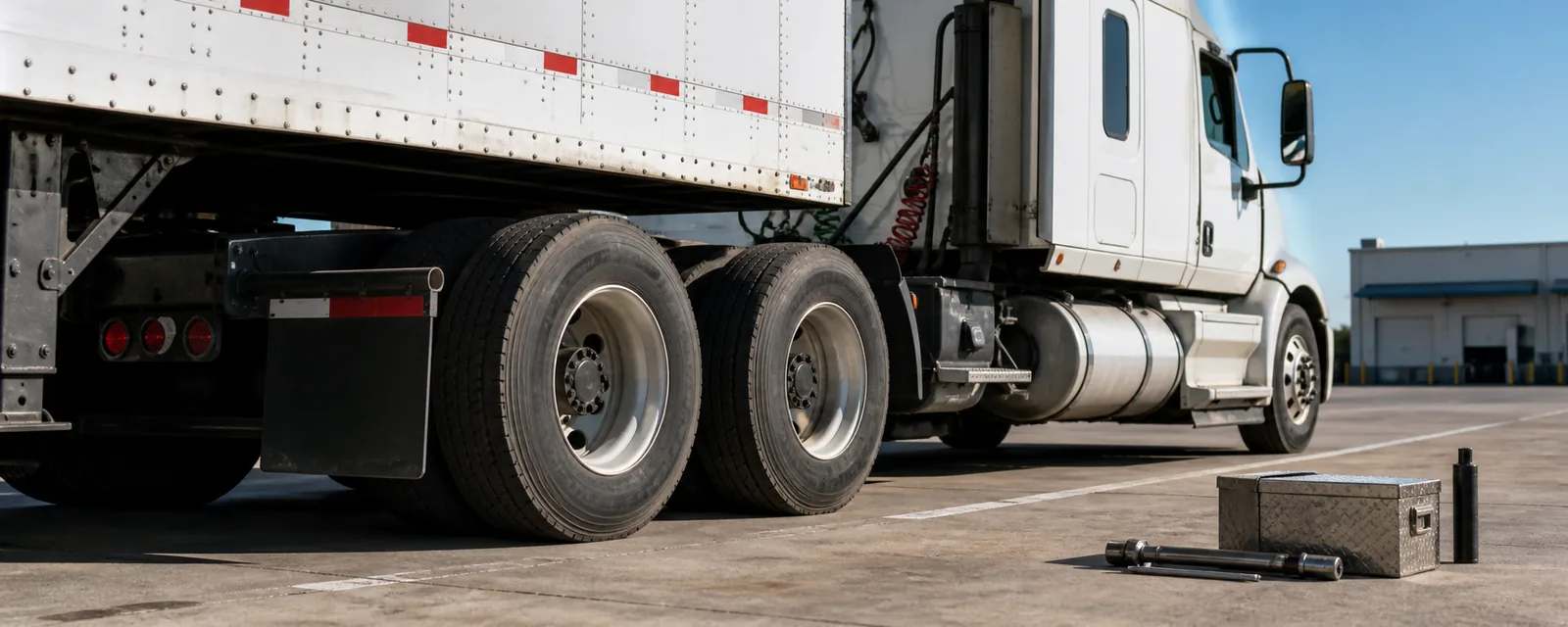
What Drives Commercial Trucking Insurance Rates in Texas
Short answer: trucking premiums are driven by authority age, driver records, radius, commodity, equipment value, CSA scores, and loss history. Some of those you can change this month. Some only improve with time and clean operating. Knowing which is which is the difference between managing your cost and just complaining about it.
Insurance is frequently an owner-operator's second largest expense after fuel, and for a new authority it is often the reason the business does not survive year one. Understanding the inputs lets you present your operation accurately and fix the things that are actually fixable.
This guide covers what actually sets your commercial trucking insurance cost, factor by factor, and which ones you can influence. For what coverages you are required to carry in the first place, see the trucking requirements guide.
1. Age of authority
The single biggest factor for new entrants, and the most frustrating, because you cannot do anything about it except wait.
Underwriters price on verifiable history. A brand new MC number has no loss runs, no CSA data, and no operating track record. The industry's own data shows new authorities have elevated loss frequency in the first two years, so pricing reflects that until you have proven otherwise.
What actually helps:
- Document prior experience. Years driving under someone else's authority still count for driver experience even though the authority is new. Provide employment history and, where possible, letters from prior carriers.
- Present prior loss runs if any exist, even from a leased-on arrangement.
- Expect improvement at the 12 and 24 month marks. Re-shop at both. Many owner-operators renew on autopilot and never capture the improvement.
The new trucking authority page covers what to expect in more detail.
2. Driver records and experience
Usually the largest controllable factor.
Underwriters pull motor vehicle records on every driver and look at:
- Years of verifiable CDL experience. Two years in comparable equipment is a common threshold. Below that, options narrow and price rises.
- Age. Drivers under 23 are difficult to place with many carriers, and under 21 is often a decline regardless of price.
- Major violations. DUI, reckless driving, license suspension, and leaving the scene can make a driver uninsurable on a trucking policy.
- Moving violation frequency. Several minor violations in a short window can hurt more than one moderate one, because frequency predicts behavior.
- Accident history, at fault and not at fault.
- Experience in the specific equipment and operation. Flatbed, tanker, and hazmat experience are not interchangeable with dry van.
Practical controls: write minimum hiring standards and follow them, pull MVRs at hire and annually, and stop hiring drivers your carrier will not accept. Adding a marginal driver to keep a truck moving can raise the premium on your whole fleet by more than that truck earns.
3. Radius of operation
More miles and more highway time equals more exposure.
Typical tiers:
- Local, often within 50 miles.
- Intermediate, roughly 50 to 200 miles.
- Regional, roughly 200 to 500 miles.
- Long haul, beyond 500 miles.
Beyond price, radius affects appetite. Some carriers write local delivery well and will not touch long haul. Some are the reverse.
Be accurate here. Stating a 100-mile radius and regularly running 600 creates a misrepresentation problem that surfaces at claim time, which is a far worse outcome than the higher premium you were avoiding.
4. Commodity hauled
What is in the trailer changes both the liability profile and the cargo exposure.
Generally lower rated: dry van general freight, building materials, agricultural products.
Generally higher rated: hazardous materials, which also carry much higher federal financial responsibility minimums under 49 CFR 387; refrigerated freight, because of spoilage and reefer breakdown exposure; high-value electronics and pharmaceuticals, because of theft; livestock; oversized and heavy haul; and anything requiring specialized permits.
Two mechanical points. Cargo exclusions matter as much as the rate. Many cargo policies exclude electronics, alcohol, copper, and temperature-controlled loads without a specific endorsement. And hauling a commodity outside your stated filing can create both a coverage and a compliance problem.
5. Equipment: type, age, and value
Physical damage premium tracks stated value. A newer tractor costs more to insure because it costs more to repair or replace.
Also considered:
- Equipment age. Very old equipment can be difficult to place, both for repair cost and for maintenance risk.
- Trailer type and whether you own or pull interchange trailers.
- Safety technology. Collision mitigation, lane departure warning, stability control, and cameras can earn credits with some carriers.
- Where equipment is parked overnight. A secured, fenced, lit yard rates better than street parking. Texas hail also makes covered parking relevant for comprehensive.
6. CSA scores and safety data
The FMCSA's Compliance, Safety, Accountability program tracks safety performance through roadside inspections and crash data, organized into BASIC categories.
Underwriters pay closest attention to:
- Unsafe Driving. Speeding, improper lane changes, following too close.
- Hours of Service Compliance. Logbook and ELD violations.
- Vehicle Maintenance. Out-of-service violations, lighting, brakes, tires.
- Driver Fitness. Qualification file and license issues.
- Controlled Substances and Alcohol.
- Crash Indicator.
Poor scores raise price and, past a threshold, remove carriers from the table entirely. Maintenance and Unsafe Driving are the two most directly fixable through pre-trip inspection discipline and driver coaching.
Review your own data at the CSA portal, and challenge inaccurate roadside inspection results through the DataQs process rather than letting bad data sit on your record.
7. Loss history
Underwriters typically review three to five years of loss runs.
What they are reading:
- Frequency more than severity. Five small claims usually signals more future risk than one large one, because frequency reflects operating behavior.
- Loss ratio, meaning claims paid against premium collected.
- Open reserves. A claim reserved high and not revisited affects your renewal even if it settles low. Ask your carrier to review stale reserves before renewal.
- Claim type patterns. Repeated backing incidents, repeated cargo claims, or repeated rear-end collisions each point at a different fixable process.
8. Coverage choices you control
- Liability limit. $1,000,000 is the market standard and the federal floor is lower, but buying only the floor limits which loads you can book. Rarely worth the savings.
- Cargo limit, commonly $100,000, with higher limits for specialized freight.
- Physical damage deductible. Raising it lowers premium meaningfully on newer equipment. Make sure you could actually fund it.
- Whether you carry general liability, which is inexpensive relative to auto liability and closes real non-driving gaps.
- Payment structure. Larger down payments and pay-in-full options usually reduce total cost versus financed monthly plans with fees.
9. Business structure and operations
- Owner-operator leased to a carrier versus running your own authority produces very different programs. Leased operators often need non-trucking liability or bobtail rather than full primary liability.
- Fleet size. Larger fleets can earn scheduling credits and access programs unavailable to single-truck operations.
- Whether you also broker freight, which brings its own BMC-84 bond requirement.
- Business credit and financial stability, which some carriers consider.
- Driver turnover. High turnover signals inconsistent hiring standards and is a red flag in loss control reviews.
10. How you present the submission
This is the factor nobody talks about, and it is worth real money.
Underwriters price uncertainty conservatively. A submission that arrives incomplete, inconsistent, or vague gets rated for the worst plausible interpretation, because the underwriter has to assume the gaps are unfavorable. The same operation presented completely and consistently frequently gets better terms from the same carrier.
What a strong submission contains:
- A clear operations narrative. What you haul, for whom, where, and how. Two paragraphs of plain English beats a form with blanks.
- Complete driver schedule with dates of birth, license numbers, CDL issue dates, and years of experience. Include prior employment for drivers new to your authority.
- Current MVRs rather than making the underwriter pull them and discover something you did not disclose.
- Equipment schedule with year, make, model, VIN, stated value, and lienholder.
- Accurate radius, supported by your actual lane structure.
- Complete commodity list, including the occasional loads, not just the primary freight.
- Loss runs for three to five years, with a short explanation of any significant claim and what you changed afterward.
- Safety program documentation if you have one: hiring standards, maintenance schedule, accident review process.
That last item matters more than owner-operators expect. A loss with a documented corrective action reads very differently than the same loss with no explanation. Underwriters are trying to predict the future, and evidence that you fix things is exactly the signal they are looking for.
The corollary: do not omit unfavorable information. Underwriters verify. A discovered omission does not just reprice the account, it can void coverage, and it will follow you between markets.
11. Timing and market conditions
Some of your premium has nothing to do with you.
Commercial auto and trucking have been a difficult class industry-wide, driven by rising repair costs, medical inflation, litigation trends including large verdicts against motor carriers, and reinsurance costs. When those pressures rise, carriers file rate increases across their whole book and tighten appetite, which means fewer markets willing to quote your risk regardless of how clean you run.
Practical implications:
- Start shopping 45 to 60 days before renewal, not the week of. Trucking submissions take time to underwrite, and a rushed submission is an incomplete submission.
- Do not assume your current carrier will renew. Markets exit classes with limited notice.
- A rate increase without a claim is usually market-driven, and is a reason to shop rather than a reason to cut coverage.
- Relationships matter in a hard market. A carrier that knows your operation and your loss history is more likely to keep you than a market seeing you for the first time.
What to fix first
Ranked by how quickly the effort pays back:
- Tighten driver hiring standards. Fastest and largest controllable lever.
- Fix maintenance-driven CSA violations. Pre-trip inspection discipline shows up in roadside data within months.
- Present your operation completely and accurately. Incomplete submissions get priced defensively. A clear operations description, accurate radius, honest commodity list, and organized loss runs routinely produce better terms than the same risk presented sloppily.
- Review open claim reserves before renewal.
- Re-shop at 12 and 24 months of authority age.
- Add safety technology if you are buying equipment anyway.
- Right-size deductibles to what your cash position can actually absorb.
What you cannot fix quickly
Authority age, driver age, major violations already on records, and loss history all improve only with time. The correct response is to operate cleanly so that time actually works in your favor, and to re-shop deliberately as each factor ages off rather than waiting for a carrier to volunteer a reduction.
The factors ranked by leverage
If you only have time to work on a few things, work on these in order.
| Factor | Can you change it? | How fast |
|---|---|---|
| Driver hiring standards | Yes, immediately | Next renewal |
| Submission completeness | Yes, immediately | This renewal |
| Deductible levels | Yes, immediately | This renewal |
| Maintenance and pre-trip discipline | Yes | 3 to 6 months in CSA data |
| Open claim reserves | Yes, by asking | This renewal |
| CSA scores overall | Yes, through operations | 6 to 24 months |
| Radius and commodity mix | Sometimes, if you change lanes | Next renewal |
| Equipment and safety technology | Yes, when purchasing | At purchase |
| Loss history | Only by not adding to it | 3 to 5 years |
| Authority age | No | 12 to 24 months |
| Driver age | No | Time |
The pattern worth noticing: the fastest levers are administrative rather than operational. Presenting a complete submission and tightening who you let drive costs nothing and can be done before your next renewal. Everything expensive takes time.
Where Argo fits
Trucking is the line where independent placement matters most. Carrier appetite swings hard on authority age, radius, commodity, driver profile, and loss history, and the same operation can be declined by three markets and written comfortably by a fourth.
Send your MC number, driver list with MVRs, equipment list with values, radius, commodities, and loss runs. A complete submission is worth real money in this line. Request a trucking quote.
This article describes general underwriting practice as of the review date. Individual carrier rating plans differ, and your actual premium is determined by the carrier's filed rates and your own underwriting profile.
Related resources
How Argo can help
Not sure how this guide applies to you? A licensed Argo agent can review your situation in English or Spanish.
- Review your current policy or insurance requirement
- Explain coverage choices, limits, and deductibles
- Help you start a quote or plan the next step