
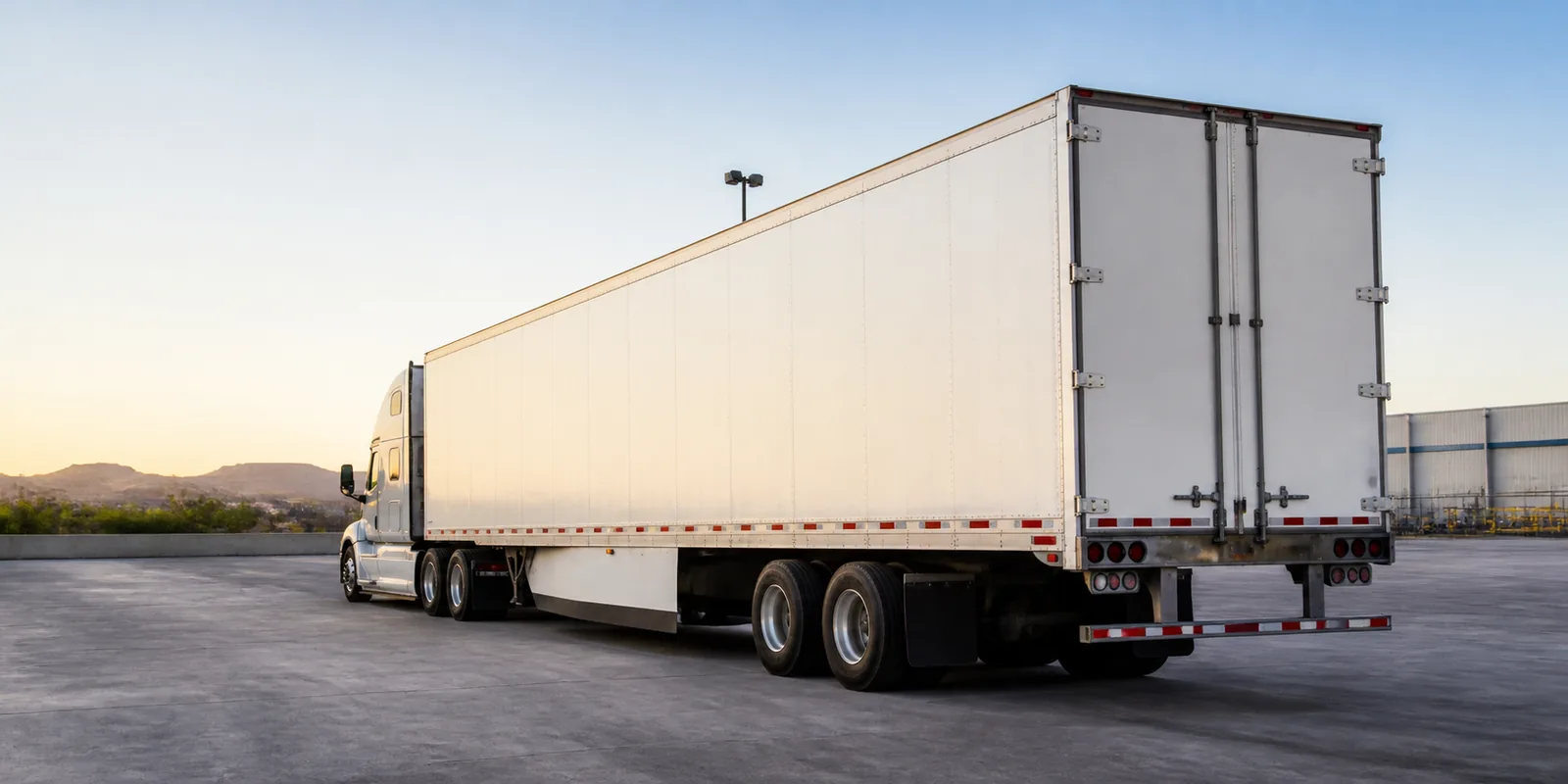
Commercial Trucking Insurance Requirements in Texas
Short answer: federal law sets a liability floor, usually $750,000 for general freight. Brokers set a much higher practical floor, usually $1,000,000 in auto liability plus $100,000 in cargo. Your authority does not activate until your insurer files proof electronically, and the filings, not the policy, are what the government is waiting on.
Trucking is the most heavily regulated line Argo writes, and the requirements come from three different places at once: federal regulation, state regulation, and the private contracts you sign with brokers and shippers. Confusing the three is what strands new authorities for weeks.
This guide separates the commercial trucking insurance requirements the law imposes from the ones the market imposes, and lists the filings that turn a policy into an active authority. If you are standing up a new operation, the new trucking authority path covers the sequencing.
The three sources of your requirements
Federal. The Federal Motor Carrier Safety Administration sets minimum financial responsibility under 49 CFR Part 387. This applies to interstate for-hire operations and to certain hazardous materials hauling regardless of state lines.
State. The Texas Department of Motor Vehicles regulates intrastate motor carriers operating entirely within Texas. Intrastate requirements and filings differ from federal ones, and a carrier running only inside Texas follows a different path than one crossing state lines.
Contractual. Brokers, shippers, freight platforms, and facility owners impose their own limits through contract. These are almost always higher than the legal minimum, and they are the requirements that actually determine whether you can book freight.
A carrier can be fully legal and still unable to work, because it met the federal floor and ignored the market floor. That is the single most common mistake among new authorities.
Primary auto liability: the foundation
Primary auto liability covers bodily injury and property damage your truck causes to other people. It does not cover your own truck, and it does not cover the freight you are hauling. Those are separate coverages.
What the regulation actually says
Under 49 CFR 387.9, the schedule of limits varies by what you haul and what you haul it in. The commonly cited tiers:
- Non-hazardous property, vehicle over 10,000 pounds: $750,000 minimum.
- Certain hazardous substances and materials: $5,000,000, including hazardous substances carried in cargo tanks, portable tanks, or hopper-type vehicles above specified capacities.
- Certain oil and lower-tier hazardous materials: $1,000,000.
- Passenger carriers: higher tiers apply based on seating capacity.
The exact tier that applies to your operation depends on commodity, packaging, vehicle weight, and capacity, and the regulation is more granular than any summary. Confirm your tier against the regulation or with your agent before assuming $750,000 is enough. FMCSA will not grant operating authority registration until the required minimum levels are on file.
What the market actually requires
Nearly every broker, shipper, and load board requires $1,000,000 in auto liability. Some shippers of high-value or sensitive freight require more, and some facilities require you to name them as additional insured before you can enter the yard.
Practical consequence: writing a policy at $750,000 to save premium is usually false economy. You save a modest amount and lose access to most of the freight market. Quote the $1,000,000 limit first and treat the federal number as trivia.
Motor truck cargo: protecting the freight
Cargo insurance covers the commodity you are hauling if it is damaged, destroyed, or stolen in transit. It pays the freight owner, not you.
For most general freight, cargo coverage is not a federal requirement. It is a contractual one, and it is universal enough that the distinction rarely matters. The standard broker requirement is $100,000, with higher limits for specialized freight.
Read the exclusions before you bind. This is where cheap cargo policies fail, and where owner-operators discover coverage gaps at the worst time. Commonly excluded or sublimited without a specific endorsement:
- Electronics, computers, and consumer devices.
- Alcohol and tobacco.
- Copper, wire, and other theft-prone metals.
- Pharmaceuticals.
- Live animals and perishable produce.
- Refrigerated freight, which typically requires separate reefer breakdown coverage. Without it, a temperature failure that spoils a load is not covered even though the freight is clearly ruined.
- Unattended vehicle theft, which frequently carries conditions about where and how the truck was parked.
- Freight left on an unattended trailer.
If you haul any of these regularly and your declarations page does not name them, you are hauling that freight uninsured.
Physical damage: protecting your own equipment
Physical damage covers your tractor and trailer. It is not legally required, but if the equipment is financed the lender will require it, and if you own it outright you are self-insuring a six-figure asset without it.
Two components:
- Collision pays to repair or replace your truck after a collision or overturn.
- Comprehensive pays for non-collision losses: theft, vandalism, fire, flood, and weather. In Texas, hail is a meaningful exposure on parked equipment.
Related coverages worth pricing at the same time:
- Gap or loan/lease payoff for financed equipment, since a total loss on a newer truck can leave a balance after the actual cash value settlement.
- Downtime or loss of use coverage, which pays a daily amount while a covered repair keeps the truck off the road.
- Towing and recovery, which is expensive for heavy equipment and is often sublimited.
- Trailer interchange, if you pull trailers you do not own under a written interchange agreement.
Non-trucking liability versus bobtail
This pair confuses more owner-operators than any other coverage in trucking, and the difference is contractual, not cosmetic.
If you are leased to a motor carrier, that carrier's primary liability policy covers you while you are under dispatch, meaning while operating in the business of the carrier. It does not cover you the rest of the time.
- Non-trucking liability covers the truck when you are not operating in the business of the motor carrier. Driving home, running an errand, taking the tractor to the shop on your own time.
- Bobtail is generally broader. It applies when the tractor is operated without a trailer attached, whether or not you are under dispatch.
Your lease agreement will specify which one the carrier requires. They are not interchangeable, and buying the wrong one means failing a compliance check or discovering a gap after a loss. Read the lease, then buy to the lease.
General liability is not auto liability
Auto liability responds to accidents involving the vehicle. General liability responds to almost everything else your business does.
Examples that fall to general liability rather than auto:
- A customer or driver slips and falls at your terminal or yard.
- You damage a loading dock, canopy, or building while backing in.
- Damage caused during loading or unloading, depending on the policy language and who was doing the work.
- Products and completed operations exposures if you also perform services.
Many shippers and facilities require general liability by contract, commonly at $1,000,000. Some also require it before they will issue a gate pass. It is inexpensive relative to auto liability and it closes a real gap.
Workers compensation and occupational accident
If you have employee drivers, workers compensation is the coverage that responds to their injuries. Texas does not mandate workers compensation for most private employers, but going without it as a nonsubscriber carries its own legal exposure and reporting obligations, and many shippers require it contractually regardless.
Owner-operators who are not employees frequently carry occupational accident coverage instead. It is not workers compensation. It is a different product with different benefits, exclusions, and limits, and some motor carriers accept it while others do not. Confirm what your carrier's lease requires before assuming one substitutes for the other.
The filings that actually activate your authority
Having insurance is not the same as proving it. The government needs an electronic filing from your insurer, and until that filing posts, your authority does not activate no matter how much coverage you bought.
BMC-91X. The federal filing submitted to FMCSA proving you carry the required public liability. This is what activates your MC number for interstate for-hire operations. FMCSA will not grant operating authority until the minimum levels are on file.
Form E. The state-level filing submitted for Texas intrastate motor carrier operations, confirming your coverage meets Texas requirements.
Form H. Required for intrastate hazardous materials hauling in Texas.
BMC-84 or BMC-85. Not insurance. These are the surety bond or trust fund filings required of freight brokers and freight forwarders, currently at $75,000. If you are brokering loads in addition to hauling them, this is a separate requirement with a separate product.
Two practical notes. First, filings are made by the insurer, not by you, which means your agent has to be appointed with a carrier that files. Second, a cancellation also gets filed. If your policy lapses, the cancellation notice hits FMCSA and your authority can be revoked, which is why a missed payment in trucking is far more serious than in personal lines.
What underwriters look at before they quote
Trucking underwriting is stricter than most commercial lines. Expect to provide:
- MC and DOT numbers, and years in business under that authority.
- Driver list with dates of birth, license numbers, and CDL experience.
- Motor vehicle records for every driver.
- Equipment list with VINs, years, values, and any lienholders.
- Radius of operation and the states you run.
- Commodities hauled and typical load values.
- Loss runs, usually three to five years.
- CSA and safety scores.
The factors that move price hardest are driver experience, radius, commodity, loss history, and the age of the authority. New authorities pay a premium precisely because they have no track record, which the new trucking authority page covers in detail. What drives rates once you are established is covered in the rate factors guide.
Certificates of insurance for brokers and shippers
Once you are covered and filed, the document brokers actually ask for is a certificate of insurance, and Texas regulates what a certificate may say.
Under Texas Insurance Code Chapter 1811, a certificate cannot state anything the policy does not already provide, and it cannot reference the insurance requirements of another contract. If a broker demands additional insured status or a waiver of subrogation, those have to exist as endorsements on your policy first. The Texas certificate rules explain why an agent cannot simply type requested language onto the form.
Send broker packet requirements to your agent before you sign, not after a certificate gets rejected.
Requirement checklist before you haul
- Auto liability at $1,000,000, not just the federal floor.
- Cargo at $100,000 minimum, with your actual commodities reviewed against the exclusions.
- Reefer breakdown if you haul temperature-controlled freight.
- Physical damage on every financed or owned unit, plus trailer interchange if applicable.
- Non-trucking liability or bobtail, matched to what your lease requires.
- General liability, commonly $1,000,000, for terminal and non-driving exposures.
- Workers compensation or occupational accident for your drivers.
- BMC-91X filed for interstate authority.
- Form E filed for Texas intrastate operations, and Form H if hauling hazmat intrastate.
- BMC-84 bond if you also broker freight.
- A certificate of insurance that matches your policy, with any required endorsements actually in place.
Where Argo fits
Argo Insurance is independent and writes trucking across multiple carriers, which matters more in this line than most. Trucking appetite swings hard on authority age, radius, commodity, driver profile, and loss history, and a risk one company declines is often written comfortably by another.
For new ventures, the goal is to quote, bind, and file the same business day so the authority activates without dead weeks. Send your MC number, driver list, equipment list, and commodities, and request a trucking quote.
This article summarizes federal and state requirements as of the review date. Regulatory minimums, filing procedures, and broker requirements change, and the terms of your actual policy and lease agreement control.
Related resources
How Argo can help
Not sure how this guide applies to you? A licensed Argo agent can review your situation in English or Spanish.
- Review your current policy or insurance requirement
- Explain coverage choices, limits, and deductibles
- Help you start a quote or plan the next step